

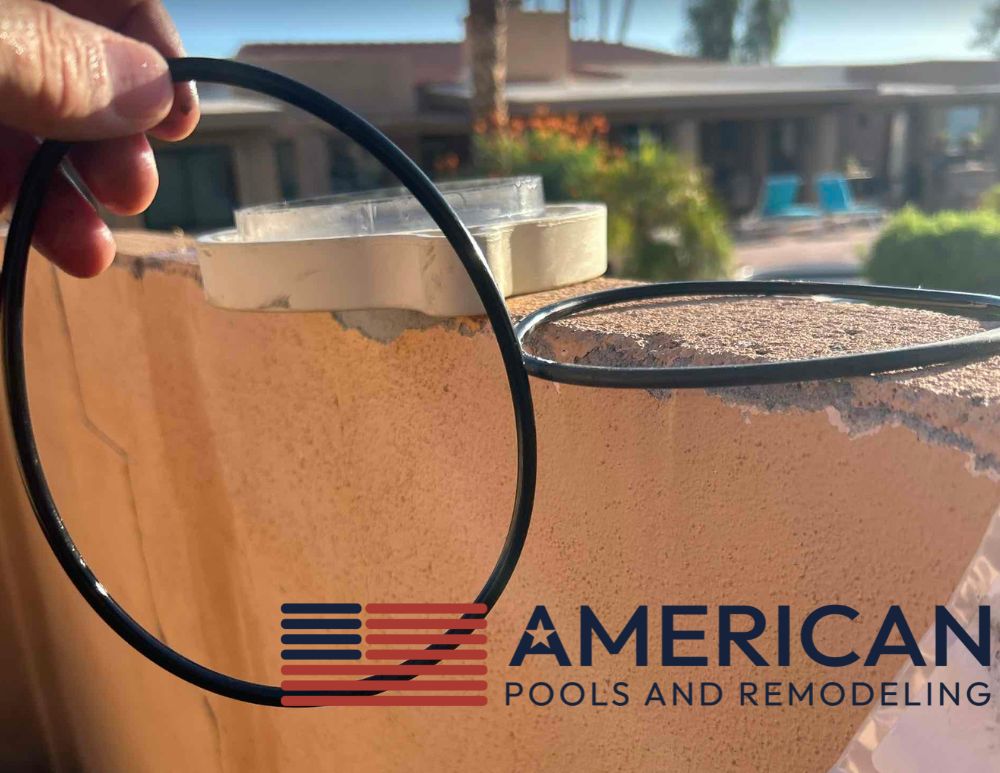
Why Pool O-Rings Fail Faster in Arizona Heat
Pool O-rings are some of the smallest components in your pool equipment, but they play an important role in keeping the entire system sealed and operating properly.
They are found throughout pool equipment, including pump lids, filters, valves, drain plugs, unions, and other plumbing connections. When an O-ring begins to dry out, flatten, crack, or lose its flexibility, it may allow air or water to pass through a connection that should remain sealed.
In Arizona, extreme heat, direct sunlight, long equipment run times, and year-round pool operation can accelerate this wear.
That is why pool O-ring replacement in Arizona is often a relatively small repair that can prevent a much larger equipment problem when a failing seal is caught early.
What Does a Pool O-Ring Actually Do?
An O-ring creates a seal between two pool equipment components.
Depending on where it is located, that seal may need to keep water inside the system or prevent air from being pulled into the plumbing.
Common O-rings are found around:
- Pump lids
- Filter tanks
- Pool valves
- Pump drain plugs
- Filter drain plugs
- Unions and plumbing connections
- Chlorinators and other equipment
When these seals are in good condition, they are easy to overlook. Once they begin to fail, however, homeowners may start noticing air bubbles, dripping water, difficulty priming the pump, changes in pressure, or reduced circulation.
Many of these symptoms can initially look like larger pool equipment problems, even though the issue may begin with something as simple as a worn seal.
Why Arizona Heat Is So Hard on Pool O-Rings
Arizona pool equipment spends much of the year exposed to conditions that accelerate normal wear.
Equipment pads can become extremely hot during the summer, particularly when they receive direct afternoon sun. At the same time, pumps may be operating for longer periods to maintain adequate circulation during periods of high temperatures and increased pool use.
Repeated exposure to heat can gradually cause rubber seals to lose flexibility. Instead of remaining soft enough to maintain a tight seal, an older O-ring may become harder, flatter, brittle, or cracked.
This is only one example of how Arizona heat shortens equipment life. Motors, seals, valves, plumbing components, and other equipment all experience additional stress under desert conditions.
An O-ring does not necessarily fail suddenly. In many cases, deterioration happens gradually until the seal can no longer compensate for movement, pressure, or small changes in the equipment connection.
Pump Lid O-Rings Are a Common Source of Air Leaks
The pump lid O-ring is one of the most important seals on the equipment pad.
Your pool pump depends on a properly sealed suction system to pull water from the pool. The O-ring beneath the pump lid helps create that airtight connection.
As the O-ring ages, it may:
- Dry out
- Become flattened
- Develop small cracks
- Stretch or lose its shape
- Become pinched or twisted
- Stop sealing evenly against the pump lid
Unlike many plumbing leaks, a failing pump lid O-ring does not always produce visible water on the equipment pad.
Because the pump lid is located on the suction side of the system, a damaged seal can allow air to be pulled into the pump while it is operating.
Homeowners may first notice air in the pool lines, bubbles underneath the pump lid, bubbles coming from the pool returns, or a pump that has difficulty maintaining prime.
Even a relatively small air leak can interfere with normal water movement and contribute to broader pool circulation problems if it is ignored.
A Small Air Leak Can Make Your Pump Work Harder
A pool pump is designed to move water—not a mixture of water and air.
When air continually enters through a deteriorated O-ring or another suction-side connection, the pump may not operate as efficiently as it should.
You might notice:
- A visible air pocket inside the pump basket
- Bubbles coming from return jets
- Inconsistent skimmer suction
- Difficulty priming the pump
- Changes in water flow
- Unusual pump sounds
Air entering the system is also one possible reason a pool pump gets louder during operation.
The source should be identified rather than assuming the pump itself needs to be replaced. A worn O-ring, loose lid, failing valve seal, low water level, or plumbing problem can sometimes create similar symptoms.
Catching the actual cause early can help prevent unnecessary strain and eventual pool pump failure.
Filter Tank O-Rings Have a Different Job
Your pool filter also relies on a large O-ring to maintain a watertight seal.
On many cartridge and DE filters, this seal sits between sections of the filter tank. Once the filter is assembled and operating under pressure, the O-ring helps keep water contained inside the filter.
Over time, the filter O-ring can become compressed, dry, dirty, stretched, or damaged.
A deteriorating filter tank O-ring may cause:
- Water dripping around the tank seam
- Moisture collecting beneath the filter
- A leak that becomes more noticeable when the pump is running
- Difficulty getting the filter tank to seal properly after cleaning
This is one reason the condition of the tank O-ring should be inspected whenever the filter is opened for pool filter cleaning.
A filter should never simply be opened, cleaned, and reassembled without looking at the condition of the seal. If the O-ring is damaged, improperly positioned, or no longer able to maintain a reliable seal, it may need to be replaced.
Ignoring a leaking filter can eventually turn routine maintenance into a more significant filter repair or replacement issue.
Pool Valve O-Rings Wear Out Too
Pool valves also contain seals that allow internal components to move while directing water through different parts of the plumbing system.
As these seals age, valves may become harder to turn, develop leaks, or allow air into the system depending on where the valve is located.
This is particularly important with three-way diverter valves commonly found around pool pumps, skimmers, main drains, cleaners, spas, and water features.
Understanding how pool valves work makes it easier to see why a small internal seal can affect the performance of a much larger circulation system.
A leaking valve should not automatically be assumed to require complete replacement. Depending on the valve and its condition, internal O-rings or other serviceable components may be the actual source of the problem.
Air Leaks and Water Leaks Can Look Very Different
Where an O-ring is located determines what happens when it fails.
On the suction side of the pump, a failing seal may pull air inward without leaking much—or any—water outward.
On the pressure side of the system, a deteriorated O-ring is more likely to push water outward while the equipment is running.
That is why homeowners should pay attention to both air and water.
Signs of an O-ring or seal problem may include:
- Bubbles in the pump basket
- Bubbles at pool returns
- Water around equipment
- Mineral deposits around a connection
- A pump that repeatedly loses prime
- Changes in filter pressure
- Reduced circulation
Not every unexplained drop in water level is caused by an O-ring, of course. If a pool is losing water, the source may be equipment, plumbing, the pool structure, or normal Arizona evaporation.
The location and timing of the leak can provide important clues.
Proper Lubrication Helps Protect Pool O-Rings
O-rings should not be installed completely dry when the manufacturer calls for lubrication.
A pool-compatible lubricant helps the O-ring remain flexible and allows components to fit together without pinching, twisting, or damaging the seal.
However, more lubricant is not necessarily better.
Applying excessive lubricant can attract dirt and debris, while using the wrong product can damage certain rubber materials. Petroleum-based products should not be substituted for a lubricant intended for pool equipment.
The O-ring itself should also be inspected before it is reused. Lubricating an O-ring that is already cracked, stretched, flattened, or deteriorated does not restore the seal.
Once the material has failed, replacement is usually the correct repair.
Dirt and Debris Can Prevent a Good Seal
Sometimes the O-ring itself is still usable, but the sealing surface is dirty.
Sand, dust, hair, leaves, and other small debris can collect around pump lids, filter tanks, and equipment connections. Even a small amount of material trapped against an O-ring can prevent the surfaces from sealing correctly.
Arizona equipment pads are especially susceptible to dust and windblown debris.
Before reinstalling an O-ring, both the seal and the surface it contacts should be clean and inspected for damage.
This is another reason routine equipment inspection is an important part of weekly pool service. Small leaks, unusual sounds, air in the pump, and changes in equipment operation can often be noticed before they develop into more serious problems.
Preventative Maintenance Can Catch O-Ring Problems Early
There is no single replacement schedule that applies to every O-ring on every Arizona pool.
Age, equipment condition, direct sunlight, heat exposure, frequency of equipment service, and how often a component is opened can all affect how long a seal lasts.
Instead of replacing every O-ring according to a fixed calendar, they should be inspected when the equipment is serviced and whenever symptoms suggest the system is no longer sealing properly.
Look for:
- Cracking
- Flattening
- Brittleness
- Stretching
- Swelling
- Cuts or tears
- Loss of flexibility
- Persistent air or water leaks
Routine inspection becomes increasingly important as the entire pool system ages. Understanding the typical lifespan of pool equipment in Arizona can help homeowners recognize when repeated small repairs may be signs of broader equipment deterioration.
Small Pool Repairs Should Not Be Ignored
A worn O-ring may cost far less to address than the equipment problems it can eventually contribute to.
A leaking pump lid seal can allow air into the system. A filter tank seal can allow water to escape under pressure. A deteriorating valve O-ring can interfere with proper operation or create a leak around the equipment pad.
These problems may begin small, but Arizona pools operate for most or all of the year. Small equipment issues have plenty of time to become larger ones.
If you notice air bubbles, water around your equipment, difficulty priming the pump, unusual pressure, or changing circulation, having the system properly diagnosed can determine whether you need a simple seal replacement or a more involved pool equipment repair.
Addressing worn seals early helps protect pumps, filters, valves, and plumbing while keeping the entire circulation system operating the way it should.
Common Questions About Pool O-Rings, Leaks, and Maintenance
There is no set replacement schedule for every pool O-ring. Arizona heat, direct sunlight, equipment age, and how often a component is opened can all affect how quickly an O-ring deteriorates.
O-rings should be inspected whenever equipment is opened or serviced and replaced when they become cracked, flattened, stretched, brittle, or unable to maintain a reliable seal.
Yes. A worn pump lid O-ring or another damaged seal on the suction side of the system can allow air to enter while the pump is running.
This can make it difficult for the pump to establish or maintain prime and may cause visible air underneath the pump lid or bubbles at the pool returns.
However, a failing O-ring is only one possible cause of pool pump problems, so the entire suction side should be inspected when a pump repeatedly loses prime.
Yes. If an O-ring on the suction side of the circulation system is no longer sealing properly, the pump can pull air into the plumbing.
That air may appear inside the pump basket or eventually travel through the system and come out of the return jets as bubbles.
Low pool water, leaking valves, loose pump fittings, and other suction-side problems can cause similar symptoms, so bubbles do not automatically mean an O-ring needs replacement.
O-rings should be kept clean and properly lubricated when recommended for that particular piece of equipment.
Use a lubricant intended for pool equipment and compatible with the O-ring material. Lubrication can help protect the seal and prevent it from binding or becoming pinched during reassembly.
Lubricant will not repair an O-ring that is already cracked, stretched, flattened, or deteriorated. A damaged seal should be replaced.
Yes. The large O-ring between sections of a pool filter tank creates a watertight seal while the filter is operating under pressure.
If that O-ring becomes damaged, dirty, improperly positioned, or deteriorated, water may begin leaking around the tank seam.
A filter operating under pressure should never be ignored when there is a leak. The equipment should be shut down and the cause properly inspected before continued operation.
Usually not. A filter tank O-ring that remains flexible, properly shaped, and free of damage may be reused.
However, every filter cleaning is a good opportunity to inspect the O-ring and the surfaces it seals against. If the O-ring has become cracked, stretched, flattened, or damaged, it should be replaced rather than relying on additional lubricant to make it seal.
Yes. Depending on the location of the valve, deteriorated internal seals can allow air into the circulation system or water to leak from the valve.
If a valve becomes difficult to operate, begins leaking, or appears to be contributing to an air leak, the valve should be inspected to determine whether it can be serviced or needs more extensive repair.
A good O-ring should remain flexible and maintain its original shape.
Replacement may be necessary if the O-ring has cracks or small tears, appears flattened, brittle, stretched, swollen, or distorted, or has visible cuts or pinched areas. An O-ring that repeatedly moves out of position or continues to allow air or water leaks after the sealing surfaces have been cleaned and properly assembled may also need to be replaced.
Sometimes the deterioration is obvious. Other times, diagnosing an air leak in the pool system requires checking several possible locations before identifying the source.
Protecting Your Pool Equipment in Arizona
O-rings may be inexpensive components, but they protect some of the most important equipment on your pool.
Arizona’s extreme temperatures and long pool season can accelerate normal wear on seals throughout the circulation system. Inspecting O-rings during routine maintenance and replacing damaged seals before they completely fail can help prevent air leaks, water leaks, circulation issues, and unnecessary stress on pool equipment.
If you are noticing air in your pump, leaking equipment, unusual pump operation, or other circulation problems, American Pools & Remodeling can inspect the system, identify the source, and recommend the appropriate repair.
Need Help With a Pool Equipment Problem?
American Pools & Remodeling provides professional pool equipment repairs for pumps, filters, valves, plumbing, and other pool equipment throughout the East Valley.
American Pools & Remodeling
Licensed • Bonded • Insured
Serving Chandler, Gilbert, Mesa, Queen Creek, and Tempe
Built for Arizona Pools
Comments are closed