

Pool Filter Cleaning in Arizona | Signs Your Filter Needs Service Before Summer
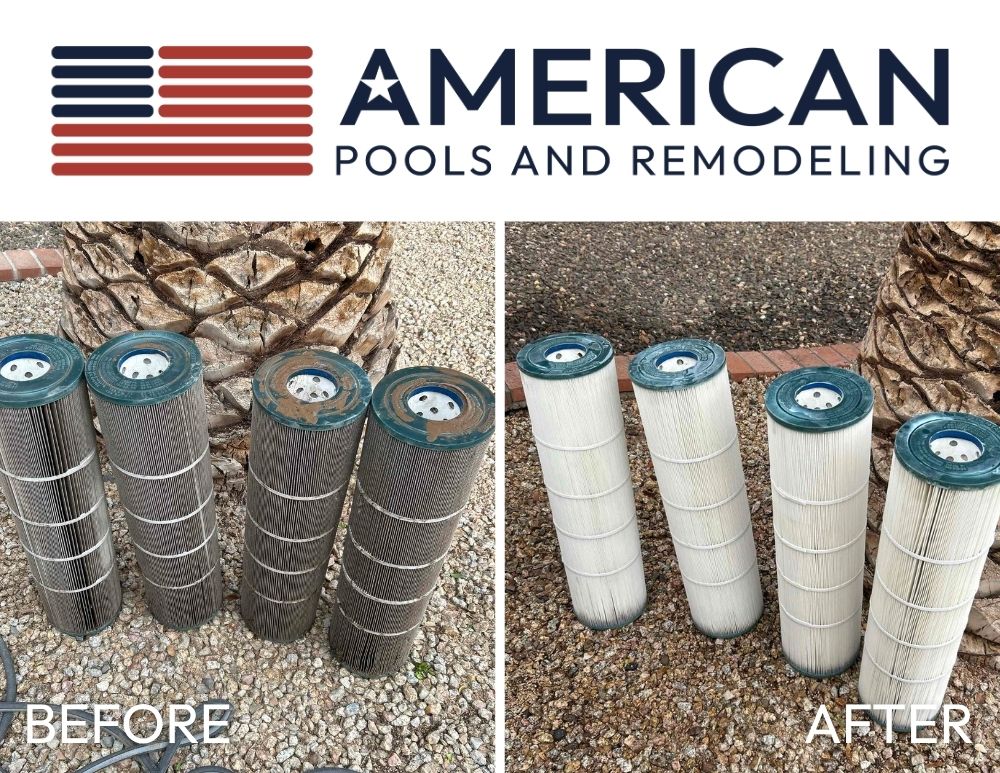
Pool filter cleaning in Arizona is essential before swim season begins. In Chandler, Gilbert, Mesa, and Queen Creek, rising temperatures, desert dust, and mineral-heavy water quickly overload filtration systems.
When filters become restricted, pressure rises, circulation drops, and water clarity declines. Without routine pool filter cleaning in Arizona, pumps are forced to work harder than they should, increasing wear and reducing overall system efficiency.
Arizona’s fine airborne dust and calcium-heavy water place constant strain on pool filters. Identifying early warning signs now helps prevent mid-summer breakdowns and protects your equipment before peak demand begins.
1. Rising Filter Pressure
Every filter system has a clean baseline pressure. When the gauge climbs noticeably above that number, debris is restricting internal flow.
In the Southeast Valley, spring dust and airborne debris accelerate filter loading.
High pressure is one of the most common pump and filter problems seen in Arizona pools, and ignoring it can shorten equipment lifespan.
Consistent monitoring during professional weekly pool service helps document pressure changes before they turn into expensive repairs.
2. Reduced Return Flow
If your return jets feel weaker than normal, your filter may be clogged.
Reduced circulation affects surface skimming, chemical distribution, and overall clarity. Weak flow often appears before visible cloudiness.
When circulation drops, your system may be working harder than it should, which increases wear on seals and motors.
Addressing filtration issues early protects pump performance and prevents mid-summer breakdowns.
3. Cloudy or Dull Water
Cloudy water is frequently blamed on chemistry. Often, filtration is the real issue.
If water does not clear after balancing, or fine desert dust repeatedly settles, your filter may not be capturing particles effectively.
Proper preparing your pool for warmer weather includes evaluating filtration performance before heavy use begins.
When filters are overloaded, contaminants recirculate instead of being removed.
4. Cartridge vs DE vs Sand Filters — What Works Best in the Southeast Valley?
Each filter type performs differently in Arizona conditions.
DE filters provide the finest filtration but require routine backwashing every six weeks and full internal cleaning every 4–6 months. They deliver excellent clarity but can be messy due to DE powder handling.
Cartridge filters require full cleaning every 4–6 months. They offer strong filtration without backwashing and are often the most practical option for Southeast Valley homeowners.
Sand filters provide the least fine filtration of the three types. In Arizona, sand should be replaced approximately every 4–5 years due to mineral-heavy water and fine dust exposure.
Professional pool filter cleaning in Arizona helps prevent circulation problems, reduce pump strain, and protect equipment before summer heat increases system demand.
Neglected filtration can eventually lead to larger pump and filter problems that reduce circulation and strain equipment.
Why Pool Filter Cleaning in Arizona Matters Before Summer
Arizona conditions are aggressive on filtration systems:
Fine airborne dust
Heavy pollen
Mineral-heavy water
Increased summer swimmer load
A restricted filter increases pump strain. Pump strain accelerates wear and shortens equipment lifespan.
In some cases, poor long-term filtration and mineral buildup can even lead to situations where a pool drain becomes necessary to reset water quality.
Routine pool filter cleaning in Arizona protects water clarity, circulation efficiency, and long-term equipment performance before extreme heat arrives.
Pool Filter Cleaning in Arizona FAQ
Most cartridge filters should be cleaned every 4–6 months in Arizona. DE filters should be backwashed about every 6 weeks and fully cleaned every 4–6 months. Sand filters should be backwashed as needed and the sand typically replaced every 4–5 years in Arizona conditions.
Rising filter pressure, weaker return flow, cloudy water, and a system that sounds or feels like it is laboring are common warning signs.
Yes. Higher temperatures and heavier swimmer use increase circulation demand, and desert dust loads filters faster, which can shorten the time between cleanings.
DE filters provide the finest filtration. Cartridge filters are a strong middle-ground for this climate because they filter well without DE powder handling. Sand filters are durable and simple, but they provide the least fine filtration.
Schedule Your Pre-Season Filter Inspection
If you’ve noticed rising pressure, weak return flow, or declining water clarity, now is the time to schedule service.
American Pools & Remodeling
Licensed. Bonded. Insured.
Built specifically for Southeast Valley pools.
Comments are closed