

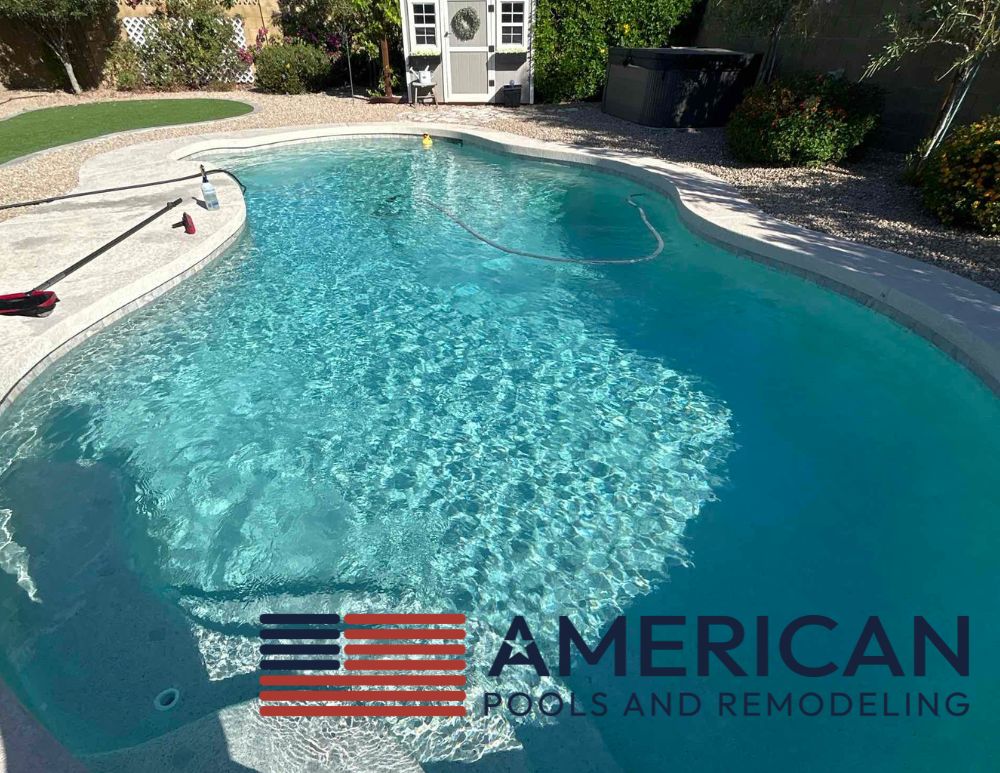
Why Your Pool Looks Clear But Isn’t Balanced (Common Summer Misconceptions in Arizona)
A pool can look crystal clear and still have serious water chemistry problems developing beneath the surface.
This is one of the most common misconceptions Arizona pool owners have during the summer. If the water looks good, everything must be fine—right?
Not necessarily.
Many of the most expensive pool problems start when water appears perfectly normal. Issues like calcium buildup, chlorine demand, pH drift, and equipment wear often develop long before the water turns cloudy or green.
Understanding the difference between clear water and balanced water can help prevent costly repairs and protect your pool throughout the summer.
Clear Water Does Not Mean Balanced Water
A pool can remain visually clear even when water chemistry is moving outside recommended ranges.
A pool can even appear clear while experiencing gradual water loss. If your water level keeps dropping, chemistry can become more concentrated over time, creating additional balancing challenges.
In Arizona, intense sunlight, high temperatures, evaporation, and hard water constantly affect pool chemistry. These changes often happen gradually, making them difficult to notice without regular testing.
The result is a pool that looks perfectly fine but may already be developing conditions that lead to future problems.
Many homeowners don’t realize they have chemistry issues until they begin noticing:
• Scale forming on tile and surfaces
• Increased chemical consumption
• Water that becomes harder to balance
• Early signs of algae growth
• Equipment performance issues
This is one reason consistent weekly pool service becomes especially important during the hottest months of the year.
Pool Water Chemistry Arizona Homeowners Often Overlook
One of the biggest challenges affecting pool water chemistry in Arizona is the state’s naturally hard water. Even when water appears clear, minerals, evaporation, and ongoing chemical demand can gradually push water balance outside recommended ranges.
As water evaporates throughout the summer, minerals remain behind. Combined with Arizona’s naturally hard water, this gradual concentration of minerals can contribute to long-term hard water damage.
A pool may still appear clean while mineral levels continue rising.
Eventually, these conditions can contribute to problems such as calcium buildup on tile, surfaces, and equipment.
Periodic water replacement is often necessary as mineral levels continue to accumulate over time, especially in pools already showing signs of water chemistry problems.
Chlorine Demand Can Increase Without Visible Warning Signs
Another common misconception is that clear water automatically means chlorine levels are adequate.
This effect becomes even more noticeable during periods of extreme summer heat, when chlorine is consumed more quickly than many homeowners realize.
In reality, chlorine demand can increase significantly during Arizona summers due to:
• Intense UV exposure
• Heavy pool usage
• Dust and debris
• Monsoon activity
• Organic contaminants
Water may remain clear for a period of time even as chlorine becomes less effective.
Eventually, homeowners may notice recurring algae, dull water, or difficulty maintaining sanitizer levels.
Rising chlorine demand is often part of a larger pattern of water chemistry challenges that become more noticeable during Arizona summers.
pH Drift Happens Constantly in Arizona
Arizona pools naturally experience pH drift.
High temperatures, evaporation, aeration, and environmental conditions all contribute to ongoing changes in water chemistry.
The challenge is that pH problems are usually invisible at first.
A pool can remain clear while elevated pH levels contribute to:
• Scale formation
• Reduced chlorine effectiveness
• Surface wear
• Equipment stress
Without routine testing, these issues often go unnoticed until more visible symptoms appear.
Problems Usually Show Up Later
One reason chemistry issues are frequently overlooked is because the consequences are delayed.
A pool may appear perfectly healthy today while conditions slowly develop that lead to:
• Algae outbreaks
• Cloudy water
• Calcium scaling
• Surface discoloration
• Increased chemical demand
• Equipment inefficiencies
In some cases, homeowners first notice changes through declining pool circulation or a filter that suddenly seems to require more attention.
By the time visible symptoms appear, correcting the problem often requires more effort and expense.
This is similar to many common pool equipment problems where early warning signs are easy to miss until performance begins to suffer.
Testing Matters More Than Guessing
Pool chemistry cannot be accurately judged by appearance alone.
The only reliable way to understand what is happening in the water is through consistent testing and adjustment.
Professional testing helps identify changes before they become visible, allowing corrections to be made early.
This proactive approach helps prevent many of the issues that eventually lead to:
• Algae treatment
• Excessive chemical use
• Surface damage
• Equipment repairs
• Cloudy water
It’s also one of the reasons year-round weekly pool service remains important, even when a pool appears perfectly healthy.
Why Weekly Service Helps Prevent Hidden Chemistry Problems
Many pool issues start long before homeowners notice them.
Regular service allows water conditions to be monitored consistently so small chemistry shifts can be corrected before they become larger problems.
Consistent weekly monitoring helps identify small chemistry changes before they become expensive repairs or water quality issues.
Instead of reacting after algae, scaling, or cloudy water appears, weekly testing helps keep the pool operating properly throughout Arizona’s most demanding months.
Pools across Chandler, Gilbert, Mesa, Queen Creek, and Tempe all experience similar challenges caused by heat, evaporation, hard water, and intense sun exposure.
This is also why a filter gets dirty faster during Arizona summers and why many homeowners experience increasing chlorine demand as conditions become more demanding.
Consistent monitoring is often the difference between maintaining stable water and dealing with avoidable problems later in the season.
Frequently Asked Questions
Yes. Water clarity only reflects part of the pool's condition. Issues involving pH, calcium levels, sanitizer effectiveness, and other chemistry factors may not be visible.
Factors such as sunlight, evaporation, dust, hard water, and swimmer load can increase chemical demand even when the water remains clear.
Arizona's naturally hard water combined with evaporation concentrates minerals over time, increasing the likelihood of scale formation.
Pool water should be tested consistently throughout the year. Summer conditions often cause chemistry to change more rapidly than many homeowners expect.
Stay Ahead of Hidden Water Chemistry Problems
A clear pool is not always a balanced pool.
Many of the most expensive pool problems begin when water appears perfectly normal. Consistent testing, proper chemical adjustments, and regular monitoring help catch issues early before they affect your water quality, equipment, or pool surface.
Keep Your Pool Properly Balanced All Summer
Don’t wait until cloudy water, algae, or scale buildup appear. Regular testing and professional monitoring help keep your water balanced, your equipment protected, and your pool ready to enjoy throughout Arizona’s hottest months.
American Pools & Remodeling
Licensed • Bonded • Insured
Serving Chandler, Gilbert, Mesa, Queen Creek, and Tempe
Built for Arizona Pools
Comments are closed