

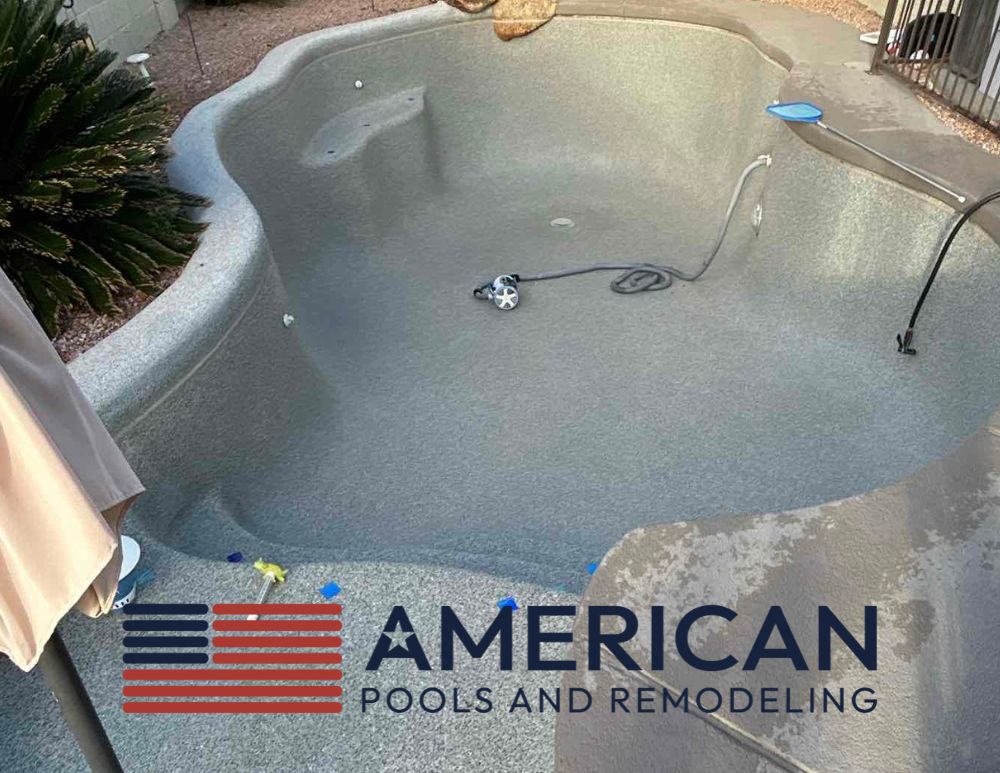
When Is the Best Time to Drain a Pool in Arizona?
How to Tell If Your Pool Water Is Too Old Before Summer
Draining a pool in Arizona is not seasonal maintenance — it is mineral control.
In Chandler, Gilbert, Mesa, Queen Creek, and Tempe, extreme heat and constant evaporation steadily increase calcium concentration inside your pool. Water evaporates, but minerals remain. Replacement water adds more dissolved solids. Over time, calcium hardness and total dissolved solids (TDS) rise to levels that chemical balancing alone cannot correct.
The best time to drain a pool in Arizona is determined by water condition — especially before peak summer heat accelerates calcium buildup and chemical instability.
Why Pools in Arizona Eventually Need to Be Drained
Arizona pools rarely receive enough dilution to offset mineral accumulation. Each evaporation cycle leaves calcium behind. Every refill introduces more minerals.
As saturation increases, you may notice:
Calcium buildup along the waterline tile
Rough plaster or pebble finishes
Higher chlorine demand
Frequent chemistry adjustments
Reduced heater and salt system efficiency
Most pools in the East Valley require draining every two to three years depending on refill frequency, evaporation rate, and maintenance consistency.
A detailed explanation of drain timing and mineral saturation is outlined in How Often to Drain a Pool in Arizona.
When Is the Best Time to Drain a Pool Before Summer?
The safest time to drain a pool in Arizona is before consistent triple-digit temperatures.
Draining before summer allows:
Reduced surface exposure to extreme heat
Easier startup balancing
Lower initial calcium saturation
Improved chlorine stability
Waiting until peak heat increases scaling risk and makes balancing more aggressive and expensive.
If your pool water is approaching two to three years old, evaluating it before summer can reduce chemical strain and protect interior finishes.
Signs Your Pool Water May Be Too Old
Clear water does not mean low mineral content. Many pools in Chandler, Gilbert, Mesa, Queen Creek, and Tempe appear clean while mineral saturation continues increasing.
Calcium Hardness Remains Elevated
If calcium hardness consistently tests high despite adjustments, the water may be saturated. Calcium buildup on tile is often the first visible warning sign.
Surface scale can be removed with professional pool tile cleaning in Arizona, but cleaning does not remove dissolved calcium from the water itself. If the mineral concentration remains high, scale will continue forming.
Pool Chemistry Feels Unstable
If chlorine burns off quickly or balancing feels inconsistent week after week, elevated TDS may be interfering with chemical performance.
Even with consistent weekly pool service, mineral levels continue rising due to evaporation.
Water Has Not Been Replaced in Two to Three Years
In Arizona’s climate, most pools reach drain range within two to three years. Heavy refill cycles accelerate calcium concentration.
If you are unsure when your pool water was last replaced, a professional evaluation can determine whether correction or full drain service is recommended.
Interior Finish Feels Rough or Lightly Scaled
As calcium embeds into plaster or pebble finishes, texture may feel slightly rough. Addressing mineral saturation early can prevent more aggressive surface treatment later.
If finish wear has progressed, evaluating pool remodeling and resurfacing services may be necessary to restore durability and protect long-term performance.
What a Professional Pool Drain Service Should Include
Draining a pool in Arizona requires more than pumping out water.
A structured pool drain service should include:
Controlled water removal
Surface inspection
Evaluation of staining versus algae
Proper startup chemical balancing
Protection of plaster or pebble finishes
Acid washing treats mineral staining. Chlorine rinsing treats algae. They are not interchangeable.
Because soil and groundwater conditions vary across Chandler, Gilbert, Mesa, Queen Creek, and Tempe, draining should be handled by a licensed, bonded, and insured Arizona contractor.
Why Draining a Pool Before Summer Saves Money
Once temperatures exceed 100°, calcium scaling accelerates and chlorine demand increases. Equipment operates under greater thermal stress.
Draining a saturated pool before summer helps:
Reduce chemical costs
Improve water stability
Minimize scale formation
Protect interior finishes
Extend equipment lifespan
Proactive mineral management is significantly less expensive than premature resurfacing or heater replacement.
Pool Drain Services in Chandler, Gilbert, Mesa, Queen Creek & Tempe
American Pools & Remodeling provides structured pool drain services designed specifically for Arizona’s mineral-heavy environment.
Each pool drain includes evaluation of calcium levels, surface condition, and equipment impact to ensure long-term performance through peak summer heat.
Frequently Asked Questions About Draining a Pool in Arizona
Most pools in Chandler, Gilbert, Mesa, Queen Creek, and Tempe require draining every two to three years due to high evaporation and calcium-heavy water. Exact timing depends on refill frequency and maintenance consistency.
Calcium hardness and total dissolved solids continue rising. This leads to scale buildup, rough finishes, increased chemical demand, heater inefficiency, and potential surface damage.
No. Tile cleaning removes visible calcium scale but does not reduce dissolved mineral concentration in the water. If the water is saturated, scaling will continue forming.
Yes, when performed correctly. Draining must account for surface exposure, groundwater conditions, and proper startup chemistry to avoid surface damage.
Before consistent summer heat arrives. In Arizona, some pool surfaces should not be exposed during extreme heat. Draining during milder weather reduces surface stress and allows safer stabilization before peak season.
American Pools & Remodeling
Licensed. Bonded. Insured.
Built for Arizona pools.
Comments are closed