

How to Choose Pool Tile, Coping and Decking for an Arizona Pool Remodel
Choosing materials is one of the most exciting parts of remodeling a pool. It can also be one of the easiest places for a remodel to go wrong.
A waterline tile may look great on its own. The same can be true of a piece of coping, a decking sample, or a new interior finish. But once the remodel is complete, you do not see those materials separately.
You see the entire pool.
The tile, coping, decking, interior finish, water color, home, and surrounding backyard all become part of the same view.
That is why the best material combinations are not necessarily the ones where everything matches. They are the ones where the colors, textures, and finishes look like they were chosen together.
For Arizona homeowners, there is another factor to consider: intense outdoor light can make colors and materials look very different than they did inside a showroom.
Here is what to consider when putting together a material palette for an Arizona pool remodel.
Start With the Home and Backyard
Before choosing individual materials, look at what is already around the pool.
The home’s stucco, trim, roof, patio, walls, landscaping, and other permanent features can help establish a direction for the remodel.
A pool does not need to perfectly match the house. It should, however, feel like it belongs with it.
For example, a backyard with warm stucco, natural stone, and desert landscaping may work well with cream, tan, beige, or other earthy finishes. A home with cooler gray or white finishes may support a completely different palette.
Also consider what is staying.
If an existing patio, outdoor kitchen, wall, or section of decking will remain, those materials become part of the new design too.
Starting with the entire backyard helps narrow the choices before you begin comparing dozens of individual samples.
Choose the Materials as a Group
One of the biggest mistakes homeowners can make is choosing each pool material separately.
You find a tile you love.
Then a coping material catches your eye.
Later, you select decking and an interior finish.
Each choice may look good individually, but that does not guarantee they will work together.
Instead, compare the major materials as a group:
- Interior pool finish
- Waterline tile
- Coping
- Decking
- Existing finishes around the backyard
They do not need to match.
In fact, a little contrast can make the finished pool more interesting. The important part is making sure the materials complement one another rather than compete for attention.
Decide What Should Stand Out
Not every surface around a remodeled pool needs to be the focal point.
If you choose a bold or patterned waterline tile, simpler coping and decking can give that tile room to stand out.
If natural stone or travertine is one of the main features of the remodel, a quieter tile may allow the variation in the stone to become part of the design.
The same principle applies to decking.
A deck with significant movement, pattern, or color variation may look better beside simpler materials around the pool itself.
A coordinated remodel usually has some visual hierarchy. Certain materials get attention while others help connect everything together.
That often creates a more polished result than trying to make every surface interesting on its own.
Pay Attention to Warm and Cool Undertones
Neutral does not always mean neutral.
Two materials can both look beige, gray, cream, or white and still look noticeably different once they are installed next to each other.
Often, the difference is in the undertones.
Some materials have warmer undertones such as tan, gold, brown, or cream. Others lean toward cooler gray, blue, or charcoal tones.
You do not have to choose materials with identical undertones, but they should make sense together.
This is especially important when combining natural stone, tile, decking, and an interior finish. Each one covers a significant area, so a small difference on a sample can become much more noticeable once the material is installed across the pool.
Think About the Water Color
The pool water itself is part of the finished design.
The interior finish helps influence how the water appears, but it is not the only factor. Pool depth, sunlight, shadows, surrounding materials, and landscaping can all affect the final water color.
That means choosing an interior finish should not be treated as a completely separate decision from choosing tile and coping.
Imagine the finished pool with water in it.
A deeper blue water color can create a strong contrast with lighter stone or warm travertine. A softer blue or blue-green appearance can change how the exact same tile and coping combination feels.
When planning pool resurfacing, it helps to think beyond the finish sample itself and consider how that finish will affect the overall appearance of the completed pool.
Travertine Can Work With Different Pool Styles
Travertine is a popular choice around Arizona pools because its natural variation works with a wide range of homes and backyard designs.
But not all travertine looks the same.
Different selections can lean cream, tan, beige, gold, or gray. The amount of variation can also differ significantly.
That makes the surrounding material choices important.
Warm travertine can pair well with earth-toned finishes and natural-looking materials. Lighter or more neutral selections can also work with cleaner, more updated designs.
The tile, interior finish, coping profile, decking pattern, and exterior of the home all influence the final result.
Instead of thinking of travertine as one particular “look,” consider how its specific color and variation fit into the rest of the material palette.
Avoid Too Many Competing Materials
A remodel creates an opportunity to change several parts of the pool at once.
That does not mean every new material needs to make a statement.
A dramatic waterline tile, heavily varied stone, patterned decking, multiple accent materials, and a distinctive interior finish can all look great individually. Put too many of them together and the design can start to feel busy.
This is where restraint can make a big difference.
If one material has a lot of movement or pattern, consider giving it quieter materials to sit beside.
The goal is not to make the pool boring. It is to give the eye somewhere to focus.
A simpler overall palette can also make future changes easier. Outdoor furniture, landscaping, paint colors, and accessories can change over time without competing with a pool design built around several strong trends.
Choose Tile With the Entire Pool in Mind
Waterline tile is one of the easiest places to add personality to a pool remodel.
There are countless colors, shapes, textures, and patterns available, which can also make it tempting to choose the most interesting tile on the display board.
Instead, picture that tile running around the entire perimeter of the pool.
A small sample and a full waterline can create very different impressions.
If the coping, decking, and home are relatively simple, a stronger tile can become an attractive accent.
If the backyard already contains several colors, patterns, or natural materials, a quieter tile may create a cleaner transition between the water and the rest of the pool.
There is room for both timeless and more distinctive choices. What matters is whether the tile makes sense as part of the entire design.
Look at Samples in Arizona Sunlight
This is one step that should not be overlooked.
Materials can look completely different outdoors than they do under showroom lighting.
Arizona sunlight is especially bright, and it can reveal undertones and color variations that were much less noticeable indoors.
A beige stone may suddenly appear more gold. A gray tile may show blue undertones. A darker material may look considerably lighter in direct sunlight.
Whenever possible, look at samples outside.
More importantly, look at them together.
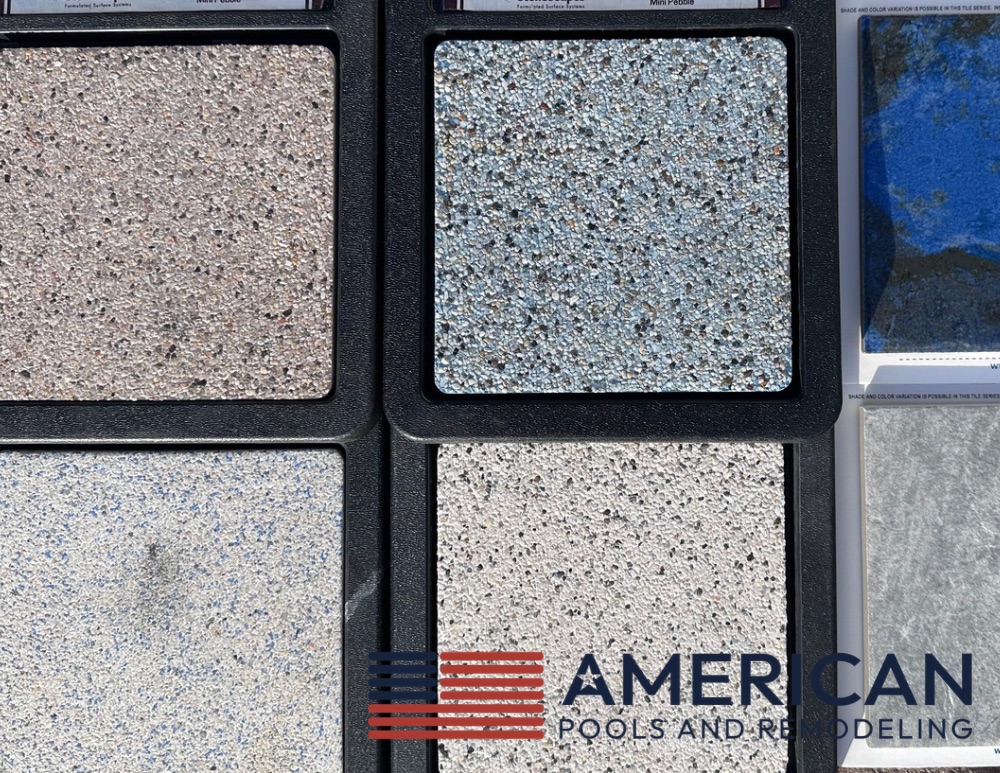
Place the tile beside the coping. Compare those with the decking and interior finish options. Then look at the combination near the house and existing backyard materials.
Check them in sunlight and shade if possible.
You are not choosing four individual samples. You are choosing what those four samples will look like when they cover hundreds of square feet around your backyard.
Make the Pool Look Like It Belongs With the Home
A remodeled pool can look completely new without looking disconnected from the property.
Consider the home’s architectural style, exterior colors, hardscape, and other permanent features when making the final material selections.
That does not mean copying the exact stone or colors already used on the house.
Sometimes repeating an undertone, texture, or general color family is enough to create a visual connection.
The goal is for the finished pool to feel intentional within the backyard—not like a separate design that happened to be installed next to the house.
When the interior finish, waterline tile, coping, decking, water color, and surrounding property all work together, the individual materials become less important than the finished result.
Choosing Pool Tile, Coping & Decking
Get answers to common questions about choosing pool tile, coping, decking, and interior finishes for an Arizona pool remodel.
Coping and decking can match or use complementary materials. Matching them can create a clean, seamless look, while using a different coping color or material can add definition around the pool edge. The best choice depends on the overall design of the pool and backyard.
It depends on the travertine. Warm cream and tan travertine can work well with blues, earth tones, and neutral tile, while cooler stone may pair better with gray or blue tones.
There is no required order. It is more important to compare the pool finish, waterline tile, coping, and decking together before making final selections.
Yes. The interior finish has a major influence on water color. Pool depth, sunlight, shadows, and the surrounding environment can also affect how the water appears.
Yes, whenever possible. Arizona sunlight can make colors and undertones look very different than they do under indoor showroom lighting.
Yes. These areas can all be updated as part of a larger pool remodel. Planning them together can also help create a more coordinated finished design.
Plan Your Pool Remodel as a Complete Design
A successful pool remodel is about more than choosing materials that look good individually.
The interior finish affects the appearance of the water. Waterline tile adds color and detail. Coping defines the pool edge, while decking connects the pool to the surrounding backyard.
When those materials are planned together, the finished pool can feel more cohesive and better connected to the home.
American Pools & Remodeling provides residential pool remodeling and renovation throughout Arizona’s East Valley. From resurfacing and waterline tile to coping, decking, structural changes, and other upgrades, we can help you plan a remodel that works with your existing pool, home, and backyard.
American Pools & Remodeling LLC
Licensed • Bonded • Insured
ROC 354926 • 355295 • 349040 • 349034
Serving Chandler, Gilbert, Mesa, Queen Creek, Tempe & Ahwatukee
Built for Arizona Pools
Comments are closed