


Acid Washing a Pool in Arizona: What It Actually Does (And When You Really Need It)
Not every stained or discolored pool needs resurfacing. In many cases, an acid wash can remove buildup that regular cleaning cannot fix.
This includes staining, algae discoloration, mineral deposits, and surface contamination.
In Arizona, pools wear down faster than most homeowners expect. Heat, hard water, and dust all play a role. Over time, these conditions affect both the look and performance of your pool.
If your pool looks dull or stained—even after balancing chemicals—an acid wash may be the reset it needs.
What Is an Acid Wash?
An acid wash is a deep surface treatment. It removes a thin layer of the pool surface to expose cleaner material underneath.
The pool is drained first. Then the surface is cleaned and treated with a diluted acid solution. This process removes staining and embedded buildup.
Because an acid wash removes part of the surface and uses strong chemicals, it should be handled by an experienced professional. Proper technique helps prevent unnecessary damage.
Acid washing is commonly used for:
- Heavy algae staining
- Mineral discoloration
- Rust stains
- Dark streaking
- Neglected pools
- Long-term water imbalance
When done correctly, it can greatly improve the appearance of an older pool surface.
Acid Wash vs. Chlorine Rinse: What’s the Difference?
These two services are often confused, but they solve different problems.
A chlorine rinse is used to kill algae and organic contamination. It works well for pools that turned green or were recently neglected.
It sanitizes the surface and removes organic staining. However, it does not remove calcium or deeper discoloration.
An acid wash goes further. It removes a thin layer of the pool surface along with the buildup attached to it.
In simple terms, a chlorine rinse cleans. An acid wash restores.
Some pools only need a chlorine rinse. Others need an acid wash because the staining has already set into the surface.
Using the wrong process can leave the problem behind. It can also remove more surface than needed. That’s why a proper inspection matters.
Why Arizona Pools Need Acid Washing More Often
Arizona pools deal with extreme conditions.
Hard water leaves behind calcium. High temperatures burn through chlorine quickly. Wind and dust constantly add debris to the water.
Over time, all of this builds up on the pool surface.
Pools that aren’t maintained consistently often start to develop water balance and circulation issues. When that happens, staining, discoloration, and surface buildup can follow.
Mineral-heavy water makes this even worse. As the pool ages, calcium and other deposits begin to attach to the surface and become harder to remove.
Signs Your Pool May Need an Acid Wash
Some problems can be fixed with chemicals or brushing. Others cannot.
Common signs include:
- Stains that do not brush away
- Dark spots after algae treatment
- Dull or discolored surfaces
- Rough or dirty-looking areas
- Water that clears, but the pool still looks dirty
If the surface looks stained instead of the water, an acid wash may help.
Acid Wash vs. Pool Resurfacing
An acid wash removes a thin layer of the surface. Resurfacing replaces it completely.
If the surface is still in good condition, an acid wash may be enough. If it is worn or breaking down, resurfacing is usually the better option.
This choice often comes up when homeowners start planning pool remodeling upgrades in Arizona.
When an Acid Wash Is NOT Recommended
Acid washing should not be overused.
Each wash removes a small layer of the surface. Over time, that adds up.
Pools with thin or damaged surfaces may not be good candidates.
When the surface is already failing, it is better to fix the root issue. This is similar to reaching a decision point like pool filter repair vs replacement in Arizona.
The Importance of Water Chemistry After an Acid Wash
An acid wash can improve how your pool looks, but it does not fix ongoing water chemistry issues.
If the water is not kept balanced, staining and buildup can return quickly.
In Arizona, water conditions change fast. Heat increases chlorine loss, and evaporation concentrates minerals in the water. This makes it harder to keep everything stable week to week.
Without consistent care, the same conditions that caused the original staining can come back.
That’s why ongoing weekly service matters after an acid wash. Keeping the water balanced and the system running properly helps protect the surface and extend the results.
Acid Washes and Calcium Buildup
Many pools that look dirty are actually covered in mineral deposits.
Calcium buildup is common in the East Valley. As water evaporates, minerals are left behind. Over time, they attach to the pool surface and tile.
In more advanced cases, this turns into heavy scaling. This is what homeowners see in calcium buildup in pools in Arizona.
Some pools also need to be partially drained before treatment. This happens when mineral levels get too high. That’s why many homeowners look into how often to drain a pool in Arizona.
How Long Does an Acid Wash Last?
It depends on several factors:
- Water chemistry
- Pool age
- Surface condition
- Maintenance quality
- Calcium levels
- Sun exposure
With proper care, results can last for years. Without it, staining can return much sooner.
Consistent cleaning and filtration help prevent buildup. These are the same conditions behind why your pool filter gets dirty so fast in Arizona.
Can Every Pool Be Acid Washed?
No.
Some pools are too worn for this process. If the surface is too thin, resurfacing is the better option.
A proper inspection helps determine what makes sense before starting.
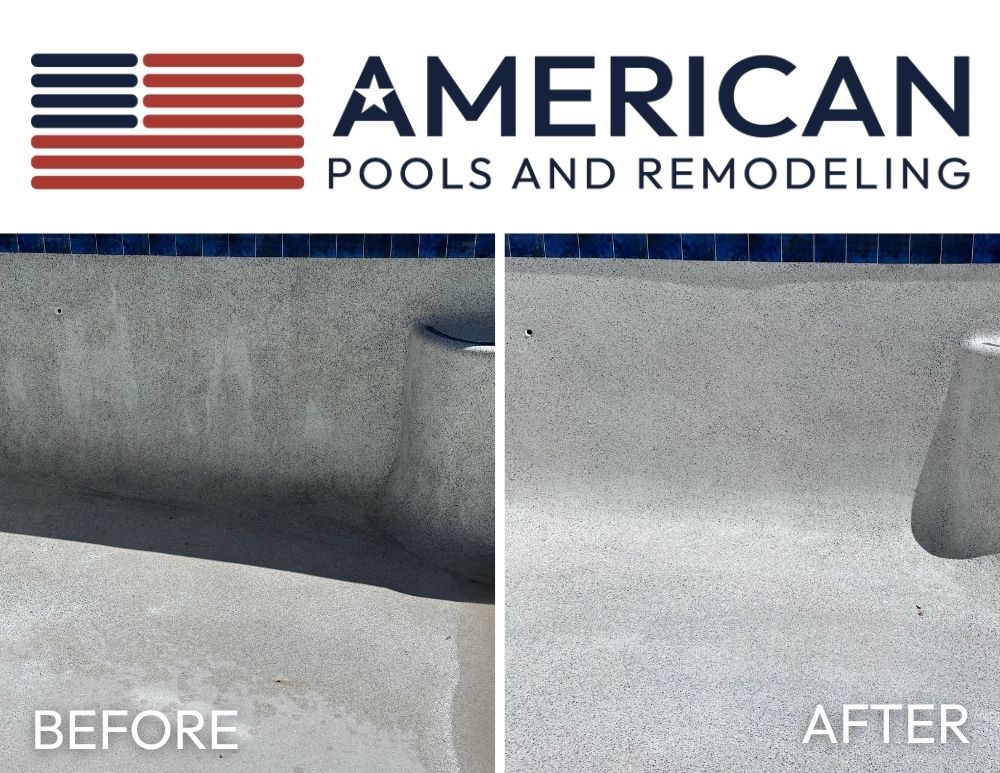
Before and After Results Can Be Dramatic
This is where homeowners see the biggest difference.
Stains that looked permanent can often be removed. The surface becomes brighter and more even.
In many cases, the issue is not the water. It is the surface itself.
An acid wash removes that outer layer of buildup. That is why the change can be so noticeable.
It is one of the most effective ways to improve appearance without a full remodel.
The key is knowing if your pool is a good candidate.
Transparent Pool Restoration Recommendations
Not every pool needs the most expensive option.
Some need resurfacing. Others need chemistry correction, filtration work, draining, or an acid wash.
A proper inspection should explain what your pool actually needs based on its condition.
How to Know If Your Pool Needs an Acid Wash or Just a Chlorine Rinse
The difference comes down to what is on the surface.
If your pool turned green or has visible algae, a chlorine rinse is often enough.
If the pool looks stained or dull even after the water is clear, the issue is likely in the surface.
Another simple test—if brushing and chemicals are not changing how the surface looks, it is probably not a sanitation issue.
A quick inspection can confirm the right approach.
Arizona Pool Acid Wash FAQs
It helps remove surface staining and some mineral discoloration, but heavy calcium may still require additional work.
It can improve appearance significantly, but results depend on the condition of the surface.
It should not be done regularly. Overuse can shorten the life of the surface.
They solve different problems. One restores the surface. The other replaces it.
Restore the Appearance of Your Pool the Right Way
A stained pool does not always need full replacement.
In many cases, an acid wash can restore the appearance and extend the life of your pool when the surface is still in good condition.
Work with a licensed Arizona contractor that understands how heat, hard water, and water chemistry affect pools in the East Valley.
Get a Clear Recommendation for Your Pool
Know exactly what your pool needs before moving forward. Whether it’s an acid wash, a chlorine rinse, or a larger upgrade, you’ll get a straightforward recommendation based on the condition of your pool.
American Pools & Remodeling
Licensed • Bonded • Insured
Serving Chandler, Gilbert, Mesa, Queen Creek, and Tempe
Built for Arizona Pools
Comments are closed