

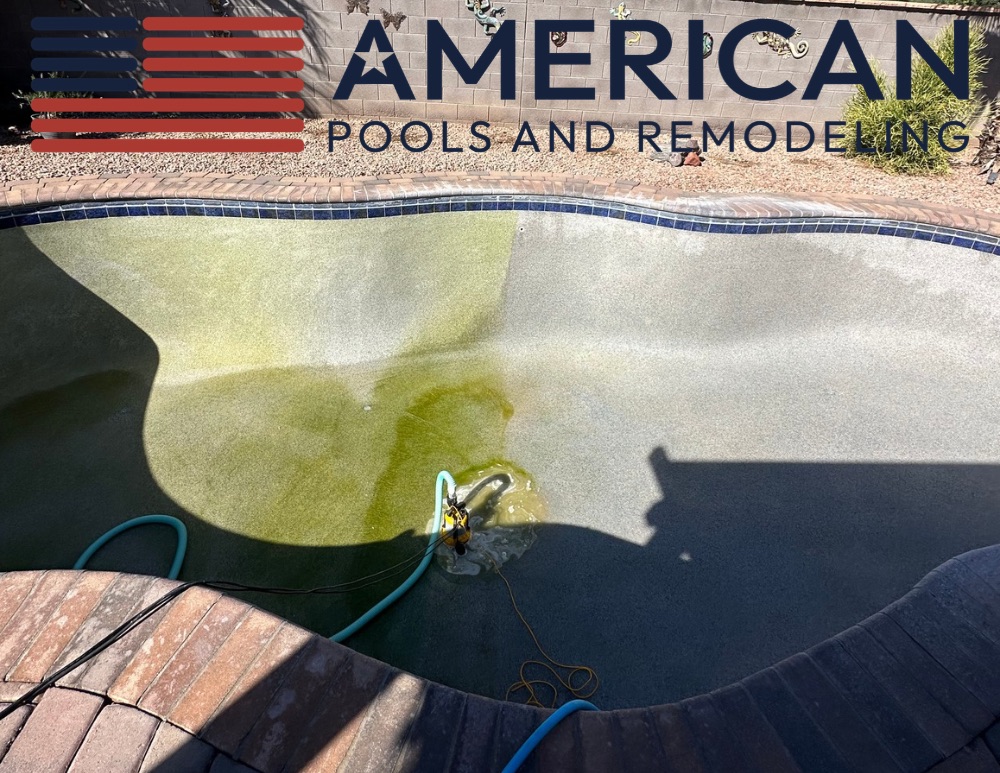
Chlorine Rinse vs. Acid Wash: Which Does Your Arizona Pool Need?
Arizona swimming pools face constant exposure to hard water, mineral buildup, dust, intense sunlight, and changing water chemistry. Over time, these conditions can contribute to algae growth, calcium deposits, staining, and discoloration that routine pool maintenance cannot always correct.
When a swimming pool needs deeper surface cleaning, homeowners may hear two recommendations: a chlorine rinse or an acid wash. Although both treatments are typically performed after draining a pool, they serve different purposes and should not be used interchangeably.
A chlorine rinse primarily addresses algae and organic contamination, while an acid wash targets certain mineral deposits, stubborn stains, and surface discoloration.
For homeowners in Chandler, Gilbert, Mesa, Queen Creek, Tempe, and Ahwatukee, choosing the appropriate treatment can help protect the pool’s interior finish and avoid unnecessary cleaning expenses.
What Is a Chlorine Rinse for a Swimming Pool?
A chlorine rinse is a surface sanitation treatment performed after a swimming pool has been drained. A chlorine solution is applied to the exposed interior surface to treat algae and other organic contamination.
Unlike an acid wash, a chlorine rinse does not intentionally remove a layer of the pool finish. Its primary purpose is sanitation rather than surface restoration.
A chlorine rinse may be recommended for pools experiencing:
- Algae growth affecting the interior surface
- Organic contamination from prolonged neglect
- Algae-related staining or discoloration
- Persistent surface contamination requiring additional treatment
However, not every pool that develops algae needs to be drained or chlorine rinsed. Many algae problems can be corrected through proper chemical treatment, brushing, circulation, and filtration.
Arizona’s intense sunlight and warm water can accelerate chlorine loss in swimming pools, making consistent sanitation especially important during the hotter months.
A chlorine rinse is generally considered when contamination requires treatment beyond normal pool maintenance.
What Is an Acid Wash for a Swimming Pool?
An acid wash is a more aggressive surface treatment used to address certain stains, mineral deposits, and discoloration that cannot be removed through routine cleaning.
During the process, a diluted acid solution is applied to the drained pool surface. The treatment removes a small amount of surface material along with certain deposits and staining.
An acid wash may be appropriate for:
- Stubborn mineral staining
- Certain calcium-related deposits
- Discoloration that does not respond to brushing
- Embedded stains on suitable pool finishes
- Surface buildup that cannot be corrected through less aggressive cleaning
Because pool acid washing affects the interior finish, it should never be performed automatically simply because a swimming pool is being drained.
The condition of the plaster or pebble finish must be evaluated first. Older surfaces may already be worn, making additional chemical treatment inappropriate.
An acid wash can improve certain surface conditions, but it cannot repair deteriorating plaster, damaged pebble finishes, or structural problems.
Chlorine Rinse vs. Acid Wash: Which Treatment Does Your Pool Need?
The biggest difference between a chlorine rinse and an acid wash is the type of problem each treatment is designed to correct. Although both involve cleaning the pool’s interior surface, they serve very different purposes.
A chlorine rinse is generally recommended for:
- Algae growth and organic contamination
- Surface sanitation after prolonged neglect
- Algae-related staining or discoloration
- Contamination that requires treatment beyond normal pool maintenance
An acid wash is generally recommended for:
- Stubborn mineral staining
- Certain calcium-related deposits
- Surface discoloration that does not respond to brushing
- Embedded stains on suitable plaster or pebble finishes
A chlorine rinse sanitizes the exposed surface without intentionally removing the finish. An acid wash is more aggressive because it removes a small amount of surface material along with certain stains and deposits.
Neither treatment is automatically better than the other. Some pools may benefit from a chlorine rinse, while others require an acid wash or a different cleaning method entirely.
In certain situations, a pool may have both organic contamination and mineral staining. The condition of the interior finish should always be evaluated before recommending either treatment.
The goal is to correct the actual problem without unnecessarily damaging or wearing down the pool surface.
Why Arizona Pools Develop Calcium Buildup and Surface Staining
Arizona’s hard water and high evaporation rates create challenging conditions for swimming pool surfaces.
As water evaporates, dissolved minerals remain behind. When fresh water is added, additional minerals enter the pool. Over time, calcium hardness and other dissolved mineral concentrations can increase.
This can contribute to:
- Calcium deposits along waterline tile
- Rough or discolored interior surfaces
- Mineral staining and scaling
- Difficulty maintaining balanced water chemistry
- Buildup on pool surfaces and equipment
However, elevated calcium levels do not automatically mean a pool needs an acid wash.
Because minerals accumulate over time, periodic pool draining may be necessary to maintain manageable calcium hardness and dissolved mineral levels.
Waterline deposits also require a different approach from staining across the interior finish. Professional tile cleaning may remove calcium buildup without treating the entire pool surface.
If existing tile or grout is deteriorating, waterline tile replacement may be a more appropriate long-term solution.
Does Your Pool Need to Be Drained Before a Chlorine Rinse or Acid Wash?
Both treatments are generally performed after a swimming pool has been drained, allowing direct access to the interior surface.
However, draining a pool and treating its surface are two separate services.
A swimming pool may need draining because of elevated calcium hardness or accumulated dissolved minerals, even when its interior finish is in excellent condition.
Likewise, a pool may have stubborn surface staining while the water chemistry remains manageable.
In Arizona, draining a pool before summer can provide an opportunity to replace mineral-heavy water before extreme temperatures arrive.
Fall and winter can also be favorable seasons for scheduled water replacement. A winter pool drain allows homeowners to address water quality concerns during cooler weather, provided conditions are suitable for the pool’s construction and finish.
At American Pools & Remodeling, we evaluate the condition of the water and the interior surface separately. A pool that only needs fresh water should not automatically receive an acid wash or chlorine rinse.
Pool draining must also be planned carefully to account for weather, construction, groundwater conditions, and the risk of damage to exposed surfaces.
Can Every Pool Surface Be Acid Washed or Chlorine Rinsed?
Not every swimming pool finish is a suitable candidate for chemical surface treatments. Most residential pools in Arizona have plaster or pebble interiors, and the age, condition, and type of finish determine which cleaning methods are appropriate.
Plaster and Pebble Finishes
Plaster and pebble surfaces can develop staining and discoloration over time. However, the age and condition of the finish are important considerations before recommending an acid wash.
Older pebble finishes must be treated with the same caution as aging plaster. If the surface is deteriorating, additional chemical treatments may cause damage or make existing problems more noticeable.
The type and condition of the existing finish also influence whether pool resurfacing is a more appropriate long-term solution.
When Resurfacing Is the Better Solution
An acid wash or chlorine rinse cannot repair a worn-out pool finish, structural cracks, deteriorating plaster, or failing pebble material.
When the interior surface has reached the end of its useful life, replacing the finish through pool remodeling and renovation may provide a better long-term solution than repeated surface treatments.
Choosing the correct approach helps protect the pool while avoiding unnecessary cleaning expenses.
How Weekly Pool Maintenance Helps Prevent Surface Problems
Although some mineral accumulation is unavoidable in Arizona, consistent maintenance can help prevent many conditions that contribute to algae growth, staining, and surface deterioration.
Proper pool maintenance includes regular brushing, water testing, chemical balancing, debris removal, and equipment monitoring.
Filtration and circulation are particularly important. Poor pool circulation can allow debris and contaminants to accumulate in certain areas, creating conditions that encourage algae growth.
Regular pool filter cleaning also helps maintain proper filtration and remove suspended debris before it contributes to additional water quality problems.
Even a pool that appears clean can develop underlying chemistry issues. Water balance, calcium hardness, and sanitation must be monitored throughout the year.
Consistent weekly pool service helps identify changing conditions before they become larger problems. However, regular maintenance cannot completely prevent mineral accumulation from Arizona’s hard water.
The goal is to protect the interior finish, maintain balanced water conditions, and reduce the likelihood of needing more aggressive surface treatments.
Choosing the Right Pool Surface Treatment in Arizona
A chlorine rinse and an acid wash are not interchangeable services. Each addresses different conditions, and neither should be recommended without considering the cause of the problem and the condition of the pool’s interior finish.
Some swimming pools need surface sanitation. Others require stain removal, tile cleaning, water replacement, or resurfacing. Many simply need improved water chemistry and consistent maintenance.
American Pools & Remodeling provides professional pool maintenance and repair services, including chlorine rinses, acid washes, tile cleaning, and pool draining throughout Chandler, Gilbert, Mesa, Queen Creek, Tempe, and Ahwatukee.
With over 15 years of experience serving Arizona’s East Valley, our focus is on recommending the appropriate treatment for each pool rather than performing unnecessary work.
Chlorine Rinse vs. Acid Wash FAQs
Common questions about chlorine rinses, acid washes, pool draining, and choosing the right surface treatment for swimming pools in Arizona's East Valley.
A chlorine rinse treats algae and organic contamination, while an acid wash removes certain mineral stains and surface deposits.
Yes. Some pools may need both treatments when algae contamination and mineral staining are present. The condition of the pool's finish determines whether both are appropriate.
A chlorine rinse does not intentionally remove surface material, while an acid wash does. Both require professional handling.
Yes. Acid washing can wear down pebble finishes, especially older or deteriorating surfaces.
No. Calcium deposits require a different treatment, depending on their location and severity.
Neither should be performed routinely. Treatment depends on the condition of the pool's interior surface.
Professional Chlorine Rinse & Acid Wash Services in Arizona’s East Valley
Not every stained or discolored pool needs an acid wash, and not every algae problem requires a chlorine rinse. Choosing the right treatment starts with evaluating the pool’s interior finish, water conditions, and the cause of the problem.
At American Pools & Remodeling, we provide professional chlorine rinses, acid washes, pool draining, and surface cleaning services throughout Chandler, Gilbert, Mesa, Queen Creek, Tempe, and Ahwatukee. With over 15 years of experience in Arizona’s East Valley, we help homeowners choose the appropriate solution to protect their investment and maintain their swimming pools.
American Pools & Remodeling
Licensed • Bonded • Insured
Serving Chandler, Gilbert, Mesa, Queen Creek, Tempe, and Ahwatukee
Built for Arizona Pools
Comments are closed