

Chlorine Rinse for an Arizona Pool: Removing Embedded Algae After Draining
Pools in Arizona are exposed to intense sunlight, dust, and long periods of warm weather. When sanitizer levels drop or a pool goes without proper maintenance, algae can begin attaching to surfaces and other areas of the pool.
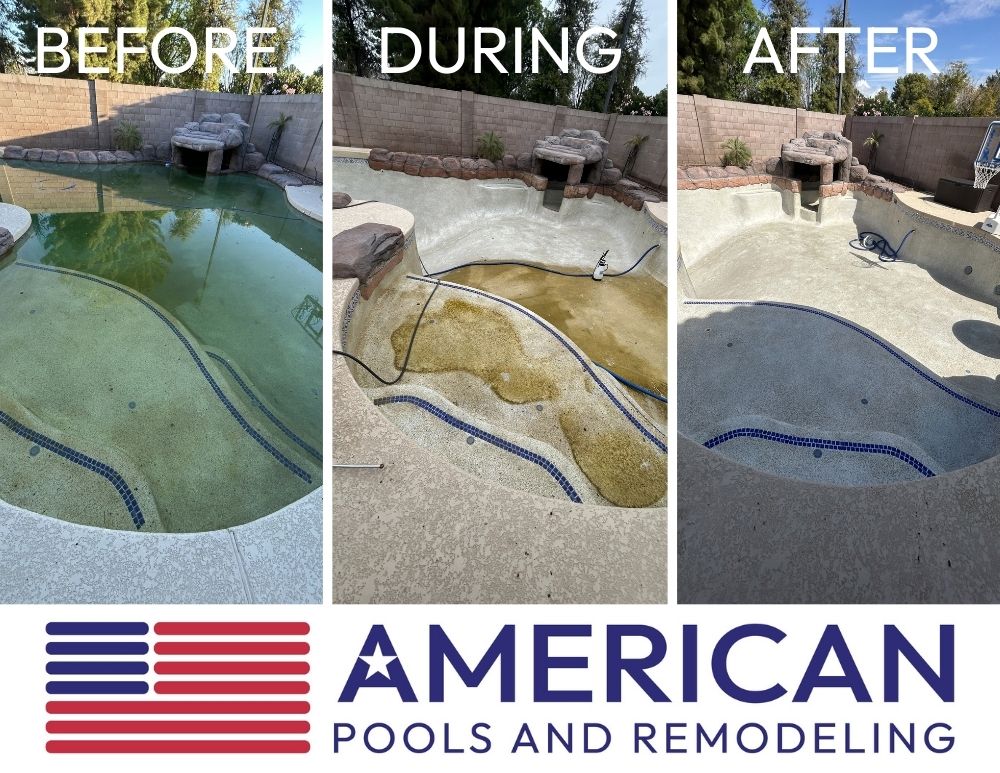
In some situations, a chlorine rinse for an Arizona pool may be recommended after draining to disinfect the exposed surface and remove embedded algae before the pool is refilled.
A chlorine rinse focuses on removing organic contamination rather than mineral buildup. Because of this, it can help restore a pool before it returns to normal operation.
When an Arizona Pool Needs a Chlorine Rinse
A chlorine rinse is typically used when algae or organic contamination has affected the pool surface. This often happens when chlorine levels fall too low for an extended period of time. As a result, algae can begin attaching to surfaces.
Arizona’s warm temperatures and strong sunlight can accelerate algae growth if water chemistry is not maintained consistently.
After the pool is drained, a chlorine rinse can help sanitize the surface and remove remaining organic material before the pool is refilled.
This type of cleaning is different from treatments used to remove calcium scale or mineral buildup caused by hard water in Arizona pools.
Chlorine Rinse vs Acid Wash
Many pool owners are familiar with acid washing. However, a chlorine rinse serves a different purpose.
An acid wash is generally used to remove calcium scale, mineral deposits, and severe surface staining from plaster. Because acid is very aggressive, it removes a thin layer of the surface during the cleaning process.
A chlorine rinse works differently. Instead of removing a thin layer of the surface, it focuses on eliminating algae and sanitizing the pool surface.
Understanding the difference between a chlorine rinse and an acid wash helps determine which treatment is appropriate for the pool.
In situations where algae is the primary issue, a chlorine rinse may be a better solution than a full acid wash.
Why Some Arizona Pools Need a Chlorine Rinse
Arizona’s desert environment creates several challenges for pool water and surfaces.
First, high temperatures increase chlorine consumption. At the same time, strong UV exposure breaks down sanitizer levels quickly. Dust, debris, and organic material entering the pool can also contribute to algae growth.
Over time, mineral-rich water can also lead to scaling and surface buildup caused by hard water in Arizona pools.
When algae contamination occurs after draining, a chlorine rinse may be recommended to disinfect the surface before the pool is refilled.
Preventing Algae After a Pool Cleaning
Once a pool has been cleaned and refilled, consistent maintenance becomes the best way to prevent algae from returning.
Maintaining proper sanitizer levels is essential. Brushing pool surfaces and monitoring water chemistry also help keep the pool balanced.
Professional weekly pool service helps ensure the water stays properly balanced while technicians inspect pool equipment and surfaces during each visit.
Consistent service can often prevent the types of problems that lead to draining or surface cleaning treatments.
Arizona Pool Cleaning Questions
Yes. A chlorine rinse helps eliminate organic contamination such as algae that can remain on pool surfaces after draining.
Disinfecting the exposed surface helps remove embedded algae before the pool is refilled.
Pools that have experienced algae growth may require this type of treatment before returning to normal operation and weekly pool service.
No. A chlorine rinse targets algae and organic contamination, while an acid wash removes mineral buildup and stains caused by calcium deposits.
Because acid washing removes a thin layer of the pool surface, it is typically reserved for pools with significant mineral scale or surface staining.
When algae is the primary issue, a chlorine rinse may be the better solution than an acid wash.
Pools may need draining or surface cleaning when algae growth becomes severe or when mineral levels become too high.
Arizona pools are particularly prone to these conditions because of evaporation and mineral-heavy water. Over time this contributes to the scaling caused by hard water.
Understanding how often to drain a pool can help prevent many of these issues before they become more serious.
Professional Pool Service in the East Valley
Pools in the East Valley face unique challenges from heat, evaporation, and mineral-heavy water. Because of these conditions, regular maintenance is essential.
Professional service helps keep pool surfaces in good condition and water safe for swimming.
American Pools & Remodeling provides professional pool service in Chandler, Gilbert, Mesa, Queen Creek, and Tempe.
Understanding when a chlorine rinse for an Arizona pool is needed can help remove embedded algae and restore pool surfaces before refilling.
American Pools & Remodeling
Licensed • Bonded • Insured
Serving Chandler, Gilbert, Mesa, Queen Creek, and Tempe
Built for Arizona Pools
Comments are closed