

Pool Valve Problems in Arizona: What Pool Valves Do and Why They Eventually Fail
One of the most common pool equipment repairs we see in Arizona involves pool valves that have become difficult to turn or no longer seal properly.
Years of extreme heat, constant UV exposure, naturally hard water, and year-round pool operation gradually wear down the internal components inside pool valves. Most homeowners don’t think much about these components until something stops working correctly.
Understanding pool valve problems Arizona homeowners commonly experience can help explain why these repairs become more common as pool equipment ages and why catching them early can often prevent more expensive repairs later.
What Do Pool Valves Actually Do?
Pool valves control where water flows throughout your pool’s plumbing system.
They direct water to different parts of your pool equipment depending on how the system is designed. Whether water is being pulled from the skimmers, circulated through the filter, sent to a raised spa, or directed to a water feature, valves help keep everything operating as intended.
When a valve is working properly, you probably won’t notice it. But when one begins to wear out, water may not flow where it should, circulation can become less efficient, and other equipment may have to work harder than necessary.
Many homeowners first notice something isn’t right after experiencing pool circulation problems that don’t have an obvious cause.
Common Pool Valves You’ll Find on Arizona Pools
Most residential pools have several different valves working together, each serving a specific purpose.
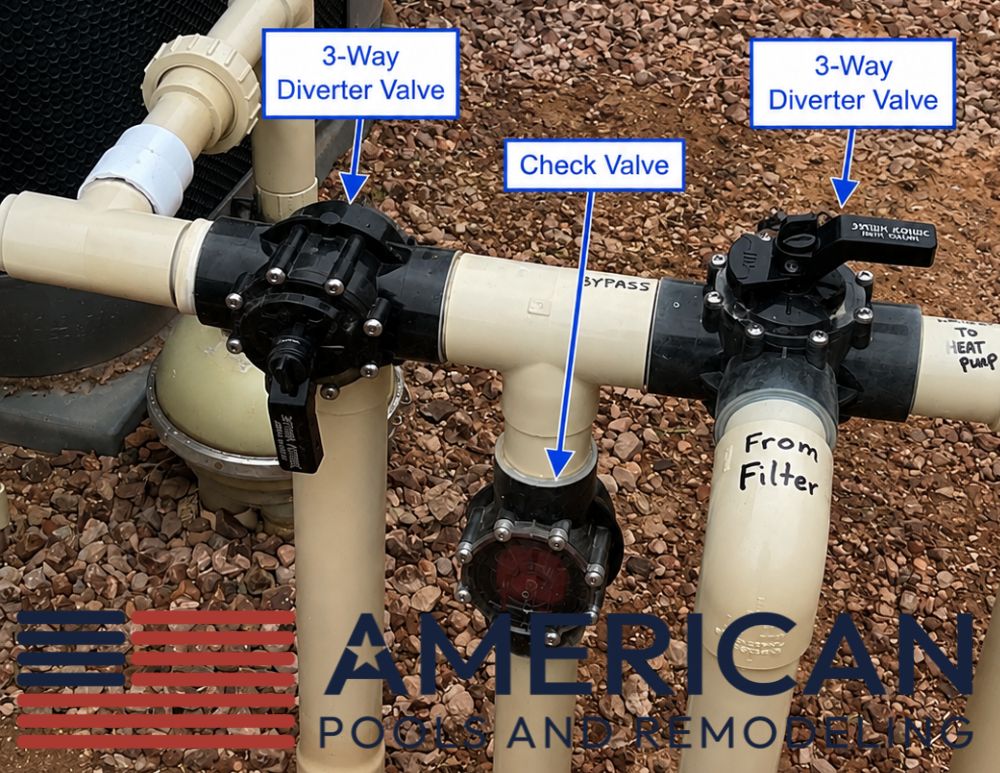
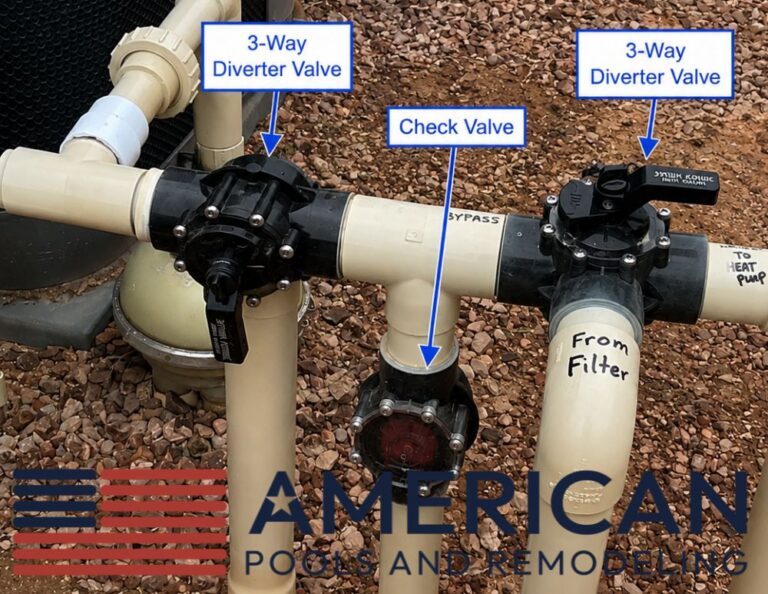
3-way valves are among the most common valves found on Arizona pools. These valves direct water between different plumbing lines and are commonly used to control suction from the skimmers and main drain, switch between pool and spa operation, or operate water features.
Check valves serve a different purpose. Rather than directing water, they allow water to flow in only one direction while preventing water from flowing backward when equipment shuts off. You’ll often find them on pools with raised spas, solar heating systems, certain water features, and some equipment configurations.
If your pool has a sand or DE filter, it likely has a backwash valve that allows water flow to be reversed during filter cleaning. Many newer Arizona pools use cartridge filters instead, eliminating the need for a backwash valve altogether.
Although each valve serves a different purpose, they all have one thing in common—they contain moving parts that gradually wear from years of use and Arizona’s harsh desert climate.
Why Pool Valves Become Difficult to Turn
One of the most common complaints homeowners notice is a valve that’s becoming harder and harder to turn.
In most cases, valve problems develop gradually over time. Years of Arizona sunshine, high temperatures, mineral deposits, aging rubber seals, and normal wear gradually increase friction inside the valve.
It’s not unusual for our technicians to find valves that haven’t been adjusted in years. Occasionally we even encounter valves that have become completely seized and require rebuilding or replacement before the system can operate properly again.
Although a stiff valve may seem like a minor inconvenience, forcing it can sometimes damage internal components or even crack the valve housing, turning a relatively simple repair into a more expensive one.
Small Parts Can Cause Big Problems
Many pool valves rely on small rubber O-rings and internal seals to create a watertight seal while allowing the valve to move smoothly.
These components aren’t visible from the outside, but they do an important job every day.
Like any rubber part exposed to Arizona’s harsh climate, they naturally age over time. They can become brittle, flatten out, crack, or simply lose their ability to seal as effectively as they once did.
Because these parts wear gradually, homeowners often don’t notice a problem until the valve becomes difficult to operate or water begins flowing somewhere it shouldn’t.
Internal Leaks Aren’t Always Visible
When most people think of a leak, they picture water dripping onto the equipment pad.
Pool valves don’t always fail that way.
Sometimes the wear happens inside the valve itself, allowing water to bypass internal seals without creating a visible leak. From the outside, everything may appear perfectly normal, but the valve is no longer directing water as efficiently as it should.
If your technician notices unusual water flow during weekly pool service, inspecting the valves is often one step in diagnosing the problem before replacing more expensive equipment unnecessarily.
Signs Your Pool Valve May Need Attention
Like most pool equipment, valves usually give warning signs before they completely fail.
Some common signs include:
- A valve that’s becoming harder to turn
- Water leaking around the valve
- Reduced water circulation
- Water not flowing where it should
- Air entering the plumbing system
- A loose or wobbly valve handle
These symptoms don’t always mean the valve itself has failed, but they are good reasons to have the equipment inspected before the problem becomes worse.
Rebuilding vs. Replacing a Pool Valve
A common question homeowners ask is whether a valve can simply be repaired instead of replaced.
In many cases, the answer is yes.
If the valve body is still in good condition, replacing internal seals, O-rings, or diverter components may restore proper operation. This is often a practical solution when the main housing remains structurally sound.
However, not every valve is a good candidate for rebuilding. Cracked housings, extensive wear, or older valves that have reached the end of their service life may make replacement the better long-term option.
The right solution depends on the overall condition of the valve, not just one worn component.
Routine Equipment Inspections Help Catch Problems Early
Pool valves rarely fail without warning.
Most problems develop gradually through years of normal operation, which is one reason routine equipment inspections are so valuable.
During an inspection, technicians often look for stiff valve movement, worn seals, cracked housings, small leaks, or changes in water flow that may indicate a valve beginning to wear.
Because every piece of pool equipment works together, a valve that’s no longer operating correctly can sometimes place unnecessary strain on pumps, filters, and other components over time.
Identifying these issues early often helps prevent more expensive repairs later and keeps your pool operating reliably throughout Arizona’s long swimming season.
As your pool equipment gets older, it’s not uncommon for several components to begin showing signs of wear. Understanding how Arizona heat shortens the life of pool equipment can help explain why these repairs become more common over time.
Common Questions About Pool Valve Problems in Arizona
Most valve problems develop gradually over time. Arizona's extreme heat, constant UV exposure, hard water, aging rubber seals, and years of normal use can all make pool valves more difficult to operate.
Often, yes. Many valves can be rebuilt by replacing internal seals and other internal components if the valve body is still in good condition. If the housing is cracked or excessively worn, replacement may be the better long-term solution.
A 3-way valve directs water to different parts of your pool's plumbing system. A check valve allows water to flow in only one direction, helping prevent water from flowing backward when the equipment shuts off.
There isn't a set lifespan. How long a valve lasts depends on its quality, how often it's used, water chemistry, Arizona's climate, and how well the equipment is maintained.
No. Forcing a valve can damage internal components or crack the valve housing. If a valve becomes difficult to turn, it's best to have it inspected before additional damage occurs.
Pool Valve Repairs Throughout the East Valley
Pool valves may be small components, but they play an important role in keeping your pool’s circulation system operating properly. Whether a valve needs a simple rebuild or complete replacement, identifying the problem early can often help prevent more expensive repairs later.
American Pools & Remodeling provides professional equipment repairs for residential pools throughout Chandler, Gilbert, Mesa, Queen Creek, Tempe, and Ahwatukee. If you’re experiencing pool valve problems or other equipment issues, we’ll inspect your system, identify the cause, and recommend the most appropriate solution for your pool.
Serving the East Valley
American Pools & Remodeling provides professional weekly pool service, equipment repairs, and pool remodeling throughout Chandler, Gilbert, Mesa, Queen Creek, Tempe, and Ahwatukee. Our experienced technicians inspect pool equipment during every service visit, helping identify developing problems before they become larger repairs.
Whether you need dependable weekly service, equipment repairs, or are planning a future pool remodel, we’re here to help keep your pool operating its best in Arizona’s demanding desert climate.
American Pools & Remodeling
Licensed • Bonded • Insured
Serving Chandler, Gilbert, Mesa, Queen Creek, and Tempe
Built for Arizona Pools
Comments are closed