

Signs Your Pool Pump Is Failing in Arizona (And When to Replace It)
What Arizona Pool Owners Need to Watch For
In Arizona, your pool pump runs harder than almost anywhere else. Between extreme summer heat, long run times, dust, and mineral-heavy water, pool equipment wears down faster—especially in the East Valley. For homeowners in Chandler, Gilbert, Mesa, and Queen Creek, a failing pump is one of the most common (and costly) pool problems. Catching early warning signs can help prevent breakdowns, poor water circulation, and expensive repairs.
Why Pool Pumps Fail Faster in Arizona
Pool pumps are the heart of your pool’s circulation system. When they begin to fail, water quality and equipment performance quickly follow. In Arizona, pumps are under constant stress due to long daily run times during hot months, high temperatures that strain motors, dust and debris entering the system, and mineral-heavy water affecting internal components. Over time, mineral-heavy water can cause internal wear and restriction from calcium buildup, putting additional strain on the pump.
Common Pool Pump Problems in Arizona
Recognizing early warning signs can help you address problems before they turn into full system failure.
1. Loud or Unusual Noises
Grinding, screeching, or rattling sounds often indicate worn bearings or internal damage. A properly functioning pump should run relatively smooth and consistent.
2. Weak Water Circulation
If your pool water looks stagnant or debris is not being pulled into the skimmer, your pump may not be moving water effectively. This can quickly lead to algae growth, poor chemical distribution, and cloudy or unbalanced water. It can also lead to increased chlorine loss, making it harder to maintain proper sanitizer levels.
3. Air Bubbles in the System
Air bubbles coming from return jets can signal a suction-side issue, leak, or failing pump components.
4. Pump Losing Prime
If your pump struggles to stay primed or shuts off unexpectedly, it may be failing internally or dealing with a suction problem.
5. Increased Energy Bills
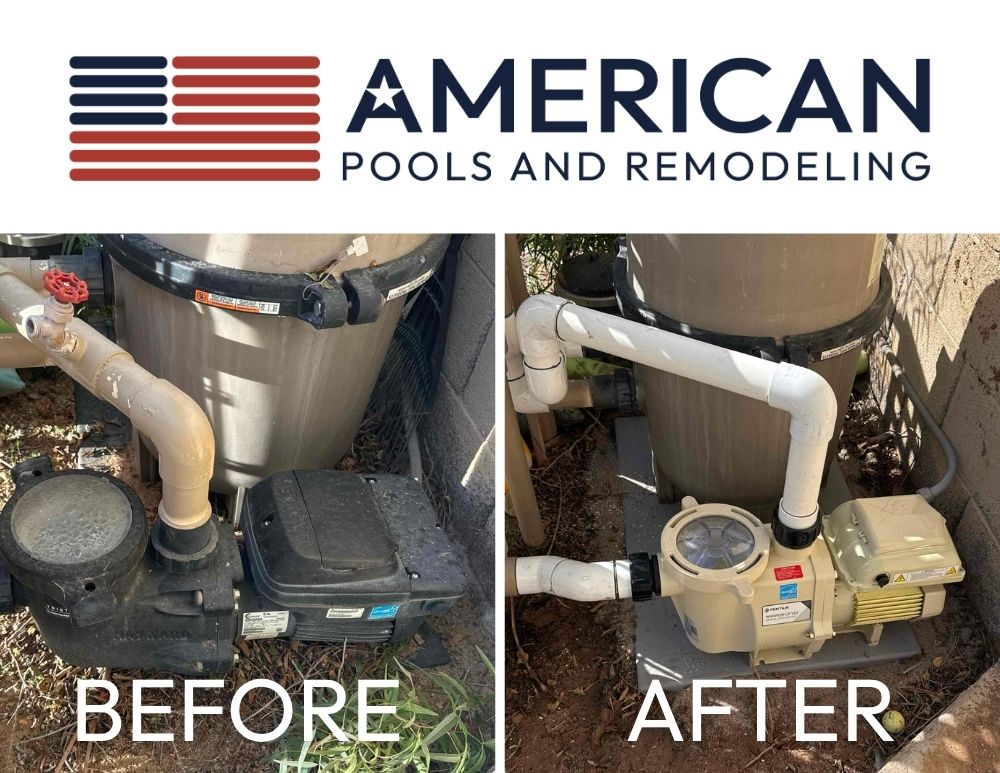
Older or failing pumps often run inefficiently, using more electricity while delivering less performance. Upgrading equipment can significantly improve efficiency—especially when switching to a variable-speed pool pump.
Repair vs Replacement: What’s the Right Move?
Not every pump issue means full replacement. In some cases, repairs can restore performance. Repairs may be possible if the issue is minor (seal, gasket, or small leak), the motor is still in good condition, or the pump is relatively newer. Replacement is often recommended if the motor is failing or overheating, bearings are worn and noisy, the pump is older and inefficient, or repairs are becoming frequent. In Arizona, many homeowners choose to upgrade rather than continue repairing older systems—especially with rising energy costs.
Benefits of Upgrading Your Pool Pump
Replacing an outdated pump can improve both performance and long-term cost savings. Benefits include better water circulation and filtration, lower monthly energy usage, quieter operation, improved system reliability, and longer equipment lifespan. Modern variable-speed pumps are designed to run more efficiently while maintaining proper circulation for Arizona pools.
How Regular Pool Service Helps Prevent Pump Problems
Consistent maintenance plays a major role in protecting your equipment. With weekly pool service, small issues can be caught early before they lead to pump failure. Regular service helps keep water chemistry balanced, prevent debris from clogging the system, monitor equipment performance, and identify early warning signs. Consistent maintenance also helps reduce strain on equipment, especially when water is properly balanced and periodically drained and refreshed. Poor circulation combined with unbalanced water can also contribute to surface issues that may eventually require acid washing or a chlorine rinse to properly restore the pool surface.
Professional Pool Pump Repair & Replacement in the East Valley
Pool pump problems should be addressed quickly to avoid damage to other equipment and water quality issues. American Pools & Remodeling provides pool pump diagnostics and repair, equipment inspections and troubleshooting, variable-speed pump upgrades, full equipment replacement and installation, and ongoing support through weekly pool service. Serving Chandler, Gilbert, Mesa, Queen Creek, and Tempe, we provide reliable solutions designed specifically for Arizona pools.
FAQ: Pool Pump Problems in Arizona
Common signs include loud noises, weak circulation, air bubbles, and difficulty maintaining proper water flow.
If the issue is minor, repairs may be possible. However, older pumps or repeated problems often make replacement the better long-term option.
Due to heat and heavy usage, pool pumps in Arizona often have a shorter lifespan than in milder climates.
Yes. Poor circulation can lead to algae growth, cloudy water, and unbalanced chemistry.
Yes. Variable-speed pumps are more energy-efficient, quieter, and provide better long-term performance.
Understanding the early signs of pool pump problems in Arizona helps homeowners prevent costly repairs and keep their pool running efficiently year-round.
Why Choose American Pools & Remodeling
✔ Licensed, bonded, and insured Arizona contractor
✔ Transparent, usage-based chemical pricing
✔ Detailed weekly service reports with photos
✔ Consistent technician scheduling (no revolving service techs)
✔ One company for service, repairs, and remodeling
✔ Locally owned and operated in the East Valley
American Pools & Remodeling
Licensed • Bonded • Insured
Serving Chandler, Gilbert, Mesa, Queen Creek, and Tempe
Built for Arizona Pools
Comments are closed