

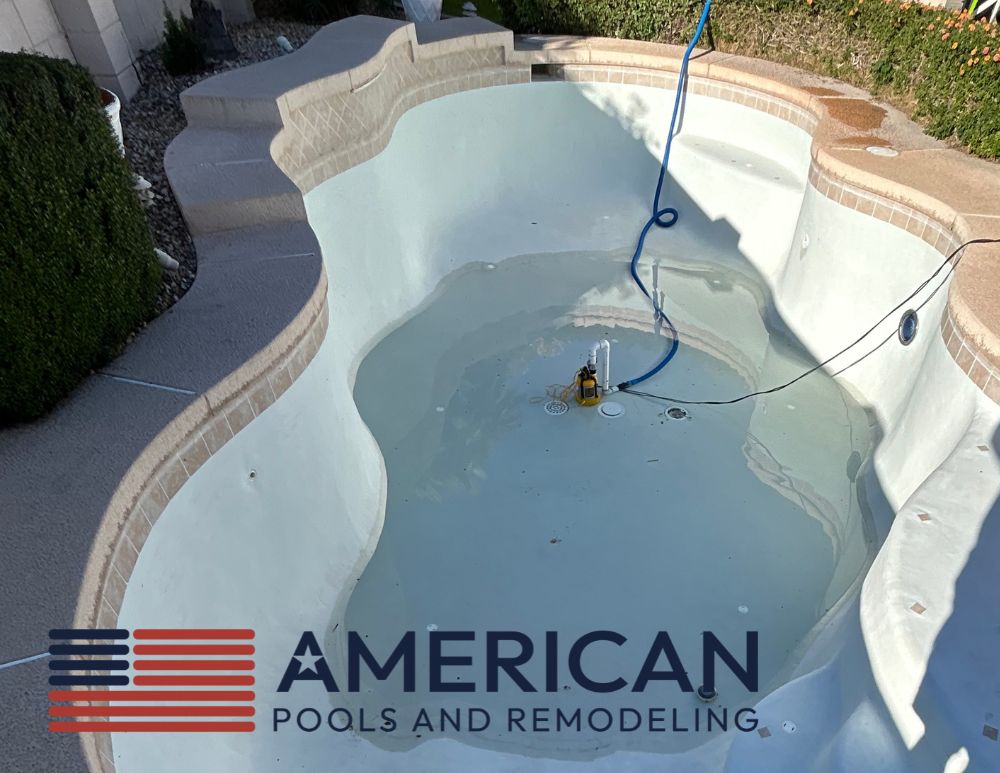
How Often Should You Drain a Pool in Arizona?
Arizona pools operate under very different conditions than pools in cooler climates. Because of extreme heat, evaporation, and mineral-rich water, pool chemistry changes much faster in the desert.
Understanding how often to drain a pool in Arizona is an important part of long-term pool care. Even with regular maintenance, minerals and dissolved solids slowly accumulate in pool water over time.
Over time, minerals and chemical byproducts increase the level of total dissolved solids (TDS) in pool water, which makes maintaining balanced water chemistry more difficult.
Eventually the water becomes harder to balance and calcium scaling can begin forming on tile lines, pool surfaces, and equipment.
Most pools in Arizona benefit from being drained and refilled every 2–3 years to reset water chemistry and maintain healthier pool water.
Rising calcium levels are one of the most common reasons pools eventually require draining, especially in areas affected by hard water in Arizona pools.
Why Arizona Pools Need Draining More Often
Arizona’s desert climate places unique stress on swimming pools. High evaporation rates, mineral-rich water, and constant sun exposure all contribute to changing water chemistry over time.
High Evaporation
Pools in the Phoenix area can lose significant amounts of water through evaporation during the summer months. When water evaporates, minerals like calcium remain behind and become more concentrated.
As these minerals accumulate, scaling can begin forming along the tile line and pool surfaces. In many cases, heavy scaling eventually requires professional tile cleaning to remove hardened deposits along the waterline.
Hard Water in Arizona
Municipal water in the East Valley contains naturally high mineral content. Every time water is added to a pool, additional calcium is introduced into the system.
Over time, this contributes to the calcium buildup problems often caused by hard water in Arizona pools.
When calcium hardness levels climb too high, maintaining balanced pool water becomes increasingly difficult.
Chemical Buildup Over Time
Pool chemicals also build up gradually.
Stabilizer (CYA), dissolved salts, and other chemical byproducts increase over time as chemicals are added season after season. Eventually the water becomes saturated with dissolved solids, making it harder to maintain proper balance.
At that point, draining and refilling the pool is often the most effective way to restore clean, manageable water.
Signs Your Pool May Need Draining in Arizona
Although many pools follow a 2–3 year draining cycle, several warning signs may indicate the water should be replaced sooner.
Watch for:
• Persistent calcium scaling on tile or surfaces
• Difficulty maintaining balanced water chemistry
• Rising calcium hardness levels
• High stabilizer (CYA) levels
• Dull or cloudy water appearance
When a pool is drained, some homeowners also choose to perform a chlorine rinse or acid wash to remove stains or surface buildup before refilling the pool.
Best Time to Drain a Pool in Arizona
Because Arizona’s extreme summer heat can damage exposed pool surfaces, draining a pool should always be done carefully and during appropriate weather conditions.
Spring and fall are generally the safest times to perform a drain because pool surfaces are less likely to be exposed to extreme heat.
Many homeowners choose to schedule draining in early spring while preparing their pool for the upcoming swim season. This timing works well with seasonal considerations related to draining a pool before summer in Arizona.
Professional Help for Draining a Pool in Arizona
Draining a pool should always be done carefully to protect the pool structure and surrounding equipment. Improper draining can create structural risks or damage surfaces exposed to extreme heat.
Professional service allows the pool to be drained safely while also giving technicians the opportunity to inspect the surface, tile line, and equipment for potential problems.
Pools across Chandler, Gilbert, Mesa, and Queen Creek often require draining sooner due to rising calcium hardness and evaporation during Arizona summers.
American Pools & Remodeling provides professional pool draining and maintenance services for homeowners across the East Valley, including Chandler, Gilbert, Mesa, Queen Creek, and Tempe.
Arizona Pool Draining FAQs
Most pools in Arizona should be drained every 2–3 years. The desert climate causes evaporation and mineral buildup that gradually increases calcium hardness and dissolved solids in pool water.
Draining during extreme heat can expose pool surfaces to damage. Spring and fall are generally the safest seasons for draining a pool in Arizona.
Over time minerals, stabilizer, and dissolved solids accumulate in pool water. This can lead to calcium scaling, cloudy water, and difficulty maintaining proper water chemistry.
Draining replaces mineral-heavy water with fresh water, which helps reset calcium levels and improve water balance. However, hardened deposits along the waterline may still require professional cleaning.
Keeping Arizona Pool Water Healthy
Arizona’s heat, evaporation, and mineral-rich water make periodic pool draining an important part of long-term pool care.
Refreshing aging pool water helps reduce calcium buildup, improve water balance, and protect pool surfaces from scaling.
Understanding how often to drain a pool in Arizona helps homeowners maintain healthier pool water and keep their pool ready for the long desert swim season.
American Pools & Remodeling
Licensed • Bonded • Insured
Serving Chandler, Gilbert, Mesa, Queen Creek, and Tempe
Built for Arizona Pools
Comments are closed