

Why Pool Repairs Cost More After They’re Ignored
Most expensive pool equipment repairs do not start as expensive problems.
A small leak, dirty filter, worn O-ring, or stiff valve may not stop a pool from operating. The pump may still run, water may still circulate, and the pool may continue to look normal.
But behind the scenes, a small problem can put additional strain on other parts of the system.
That matters even more in Arizona, where pool equipment already works under demanding conditions. Extreme heat, dust, hard water, long filtration cycles, and a long swimming season can accelerate wear when something is not operating correctly.
Catching a problem early can sometimes mean replacing a seal or servicing a component instead of replacing a pump, filter, or section of plumbing later.
Pool Equipment Works as a System
A pool’s circulation equipment is interconnected.
Water moves from the pool through the suction plumbing, pump, and filter before returning to the pool. Valves control that flow, while seals, O-rings, fittings, and plumbing connections help keep the system operating properly.
When one component develops a problem, the effects can travel through the rest of the system.
Restricted flow can make a pump struggle. An air leak can interfere with priming and circulation. A malfunctioning valve can restrict or misdirect water. A neglected filter can increase resistance and reduce overall system performance.
Many pool circulation problems start with something relatively small. Finding the cause early can prevent additional equipment from being affected.
Small Leak → Pump Problems
Not every pool leak leaves a puddle on the equipment pad.
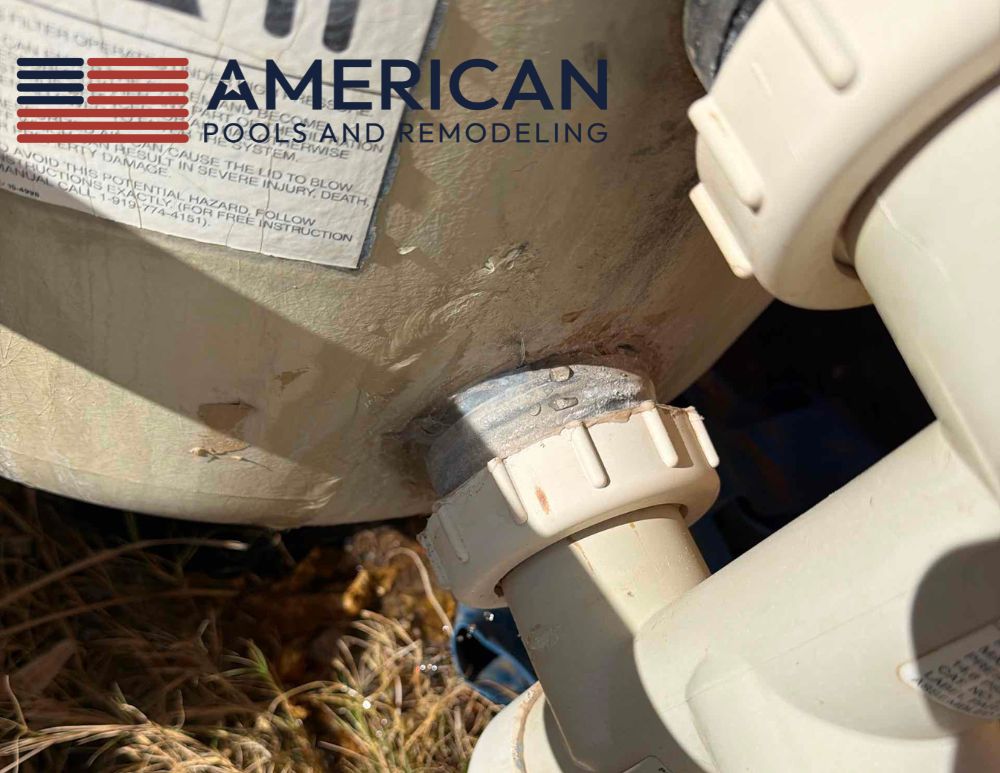
A leak around a pump lid, fitting, seal, valve, or suction-side plumbing connection can pull air into the system while the pump is running. You may notice bubbles beneath the pump lid, air coming from the return jets, difficulty priming, or inconsistent water flow.
Persistent air in pool lines is worth investigating because the pump depends on a steady supply of water for proper operation.
If an air leak continues and the pump repeatedly operates without adequate water flow, the added stress can eventually contribute to pool pump failure.
What could have been a relatively simple seal, O-ring, or plumbing repair can become a much more expensive pump repair or replacement.
Dirty Filter → Restricted Flow and Equipment Stress
A pool filter is supposed to trap debris. But as that debris accumulates, it becomes harder for water to move through the filter.
That is why regular pool filter cleaning does more than help keep the water clear. It also helps maintain proper circulation through the equipment.
Arizona pools can load filters quickly with fine dust, landscaping debris, monsoon dirt, and other airborne material. Allowing a heavily loaded filter to continue restricting flow can place unnecessary stress on the circulation system.
Filter tanks and internal components also age. When an older filter is repeatedly exposed to improper operating conditions, an issue that could have been addressed through maintenance can become a larger repair.
If the filter itself is deteriorating, knowing when filter repair or replacement makes sense can help avoid repeated problems and unexpected failure.
Bad O-Ring → Air Leak → Pump Damage
A pump lid O-ring is one of the least expensive components on an equipment pad, but it has an important job.
It creates the seal that allows the pump to maintain suction.
As an O-ring ages, it can become flattened, cracked, dry, or damaged. Once it stops sealing correctly, air can enter the pump.
Early signs can include bubbles beneath the pump lid, difficulty priming, reduced water flow, or air coming from the pool returns.
Those symptoms are easy to dismiss when the pump is still running. But continued operation with poor prime or inadequate water flow can put additional stress on the pump and motor.
A small O-ring problem is much less expensive to correct than the equipment damage that can follow.
And if a pump begins making sounds it normally does not make, unusual pool pump noise is another sign that the equipment should be inspected rather than allowed to continue struggling.
Stuck Valve → Larger Plumbing Repair
Pool valves control where water moves through the circulation system.
Over time, internal seals can wear, components can deteriorate, and Arizona’s mineral-heavy water can contribute to buildup. A valve may gradually become harder to turn long before it completely fails.
That is the time to address it.
Forcing a stuck valve can break the handle, stem, diverter, or valve body. Depending on the installation, replacing a damaged valve body may require cutting the valve out of the plumbing and rebuilding part of the equipment-pad plumbing around it.
A valve that needed service can quickly become a much larger plumbing repair.
Arizona Conditions Leave Less Room for Neglected Equipment
Pool equipment in Arizona has a demanding job.
High temperatures, intense sunlight, airborne dust, hard water, and a long swimming season all contribute to equipment wear. During the hottest months, a circulation problem that reduces water flow can be particularly hard on equipment that is already operating in extreme conditions.
That is why pool equipment efficiency depends on more than age alone.
A properly maintained pump with good water flow is operating under very different conditions than the same pump fighting a suction leak, clogged filter, or circulation restriction week after week.
Watch for Small Changes
Major equipment failures are not always predictable, but many developing problems produce warning signs.
Pay attention to:
- Water appearing around the equipment pad
- Air beneath the pump lid
- Bubbles coming from return jets
- A pump that is difficult to prime
- Reduced water circulation
- Filter pressure that is higher than normal
- New or unusual equipment noises
- Valves becoming difficult to turn
- Drips around fittings or plumbing connections
- Equipment unexpectedly shutting off
- Changes in pool cleaner performance
- Water becoming harder to keep clear
None of these automatically means an expensive repair is coming.
They are reasons to determine what changed before a small problem has an opportunity to affect something else.
The Most Important Repair Is Often Finding the Cause
Replacing the part that failed does not always solve the original problem.
A damaged pump may have been operating with restricted flow. Poor circulation may be related to the filter or a valve. Air inside the pump may originate from something as simple as a worn lid O-ring—or from a leak elsewhere on the suction side.
That is why professional pool maintenance and repairs should involve diagnosing the system rather than simply replacing whichever component stopped working.
The goal is not just to get the equipment running again.
It is to identify what caused the problem, correct it properly, and help prevent a relatively small issue from turning into the next expensive repair.
Small Problems Can Lead to Bigger Repairs
Knowing when to address a pool equipment problem can help prevent additional damage. Here are answers to common questions Arizona pool owners have about repairs, warning signs, and when equipment should be inspected.
Anything affecting water flow, pump prime, electrical operation, pressure, or active leaking should be addressed promptly.
A small drip or occasional air bubble may not seem urgent, but changes in how your equipment normally operates can be early signs of a developing problem.
If you notice reduced circulation, unusual noises, leaking equipment, difficulty priming the pump, or equipment repeatedly shutting off, it is worth having the cause identified before continuing to operate the system.
A few small bubbles beneath the pump lid are different from a pump that is struggling to stay full of water.
If a significant amount of air is repeatedly entering the pump, the cause should be identified. A worn pump lid O-ring, loose connection, valve issue, or suction-side leak may be allowing air into the system.
Continuing to operate a pump with inadequate water flow can put unnecessary stress on the equipment.
A dirty filter creates additional resistance to water moving through the circulation system. As the filter becomes increasingly restricted, circulation can decrease and operating conditions throughout the system can change.
Routine filter maintenance helps maintain proper water flow and reduces unnecessary strain on pool equipment.
Age alone does not determine whether equipment needs to be replaced.
The condition of the equipment, type of failure, availability of replacement parts, efficiency, repair history, and overall condition of the circulation system should all be considered.
Sometimes repairing an existing component makes sense. In other situations, putting money into aging equipment that is likely to experience additional failures may not be the best long-term decision.
Pool valves can become difficult to operate because of worn internal seals, damaged components, debris, mineral buildup, or age.
A valve that is becoming increasingly stiff should be inspected rather than forced. Depending on the valve and its condition, it may be possible to service or rebuild it before the valve body or surrounding plumbing is damaged.
Yes. One benefit of consistent weekly service is having the equipment inspected regularly rather than waiting until something stops working.
During weekly service, changes such as leaks, unusual equipment noise, air in the system, abnormal filter pressure, poor circulation, or other visible equipment issues may be noticed before they become major failures.
Not every equipment failure can be predicted or prevented. But having someone looking at the pool and equipment every week creates more opportunities to catch developing problems early.
Catching Pool Problems Early Can Make a Big Difference
Pool equipment will not last forever. Pumps wear out, seals deteriorate, filters age, and valves and plumbing components eventually need attention.
But there is a difference between normal equipment wear and allowing a smaller problem to put unnecessary stress on the rest of the system.
A leaking seal may be a simple repair. A dirty filter may only need service. A stiff valve may be repairable before the surrounding plumbing is affected. The sooner the cause is identified, the more options you typically have for correcting it.
That is why changes in circulation, pressure, equipment noise, water flow, or visible leaks should not be ignored just because the pool is still running.
Professional Pool Repairs in the East Valley
American Pools & Remodeling provides residential pool maintenance and repairs throughout Chandler, Gilbert, Mesa, Queen Creek, Tempe, and Ahwatukee.
As an Arizona licensed, bonded, and insured contractor, we look beyond the failed part to determine what is causing the problem. Whether it is a pump issue, leaking equipment, restricted circulation, filter problem, damaged valve, or aging equipment, the goal is to make the right repair before additional components are affected.
Our year-round weekly pool service also includes equipment inspection during every visit. Having the pool and equipment checked consistently can help identify visible leaks, circulation changes, unusual equipment operation, and other developing issues before they are easily overlooked for weeks or months.
Don’t Wait for a Small Repair to Become a Bigger One
If something about your pool equipment has changed, have it checked before the problem has a chance to affect the rest of the system.
American Pools & Remodeling
Licensed • Bonded • Insured
Serving Chandler, Gilbert, Mesa, Queen Creek, Tempe, and Ahwatukee
Built for Arizona Pools
Comments are closed