

Chlorine Rinse vs Acid Wash in Arizona Pools: What’s the Difference?
Arizona pools face some of the toughest water conditions in the country. Extreme heat, strong UV exposure, and mineral-heavy water can lead to staining, algae growth, and surface discoloration over time.
When a pool requires deeper cleaning, two treatments are commonly considered: a chlorine rinse or an acid wash.
Although these processes may sound similar, they address very different problems. Understanding the difference helps homeowners choose the correct treatment and protect the long-term life of their pool surface.
Why Arizona Pools Sometimes Need Deep Cleaning
Pools across Arizona often experience conditions that accelerate staining and surface buildup.
Common causes include:
• High calcium levels
• Long periods of stagnant water
• Algae growth in neglected pools
• Mineral staining caused by evaporation
• Surface discoloration from aging finishes
When these issues build up over time, normal brushing and chemical balancing may not fully restore the appearance of the pool.
A chlorine rinse or acid wash is performed after the pool has been drained, allowing the exposed surface to be thoroughly cleaned before the pool is refilled.
Calcium scale and staining are especially common in Arizona pools because of the region’s naturally hard water.
What Is a Chlorine Rinse for a Pool?
A chlorine rinse is a sanitation treatment performed after a pool has been drained.
Liquid chlorine is applied to the exposed pool surface and brushed across the finish. The chlorine kills algae spores, bacteria, and organic contamination that may be embedded in the surface.
A chlorine rinse is commonly used when pools have:
• Algae embedded in the surface
• Organic staining from debris
• Bacteria or biofilm buildup
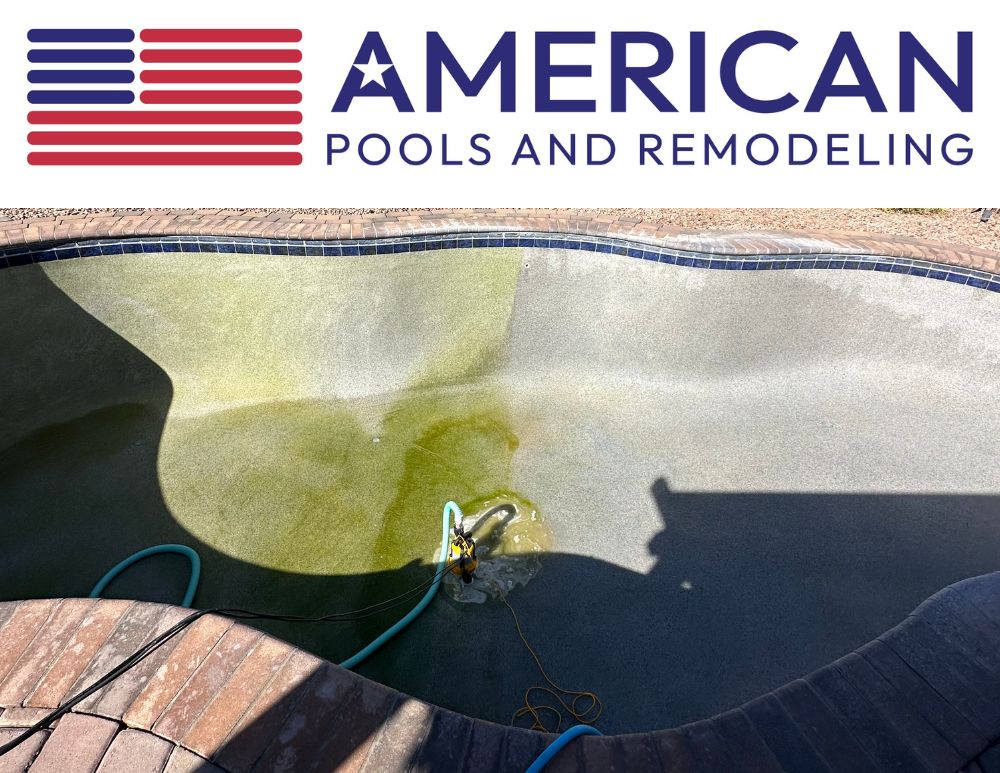
• Green pool recovery situations
Because chlorine targets organic contamination rather than mineral buildup, it is far less aggressive than an acid wash.
Pools that recently experienced algae growth often benefit from a chlorine rinse before refilling the pool and restoring proper chemistry. Preventative maintenance such as weekly pool service can also help prevent the conditions that allow algae to develop.
What Is an Acid Wash for a Pool Surface?
An acid wash is a deeper restoration process designed to remove mineral staining and surface discoloration.
During an acid wash, a diluted muriatic acid solution is applied to the drained pool surface and quickly rinsed away. The acid dissolves calcium scale and removes a very thin layer of the pool surface, revealing a cleaner layer underneath.
Acid washing is typically used when pools develop:
• Heavy calcium scale
• Mineral staining from hard water
• Long-term discoloration
• Surface buildup caused by evaporation
• Severe staining that brushing cannot remove
Because acid washing removes a microscopic layer of the surface, it should only be performed when necessary and by experienced professionals.
Pools with severe scale around the waterline may also require pool tile cleaning to remove hardened calcium deposits.
The Key Difference Between a Chlorine Rinse and an Acid Wash
The easiest way to understand the difference is by looking at what each treatment removes.
A chlorine rinse focuses on organic contamination, such as algae, bacteria, and biological buildup within the pool surface.
An acid wash focuses on mineral buildup, including calcium scale, hard water deposits, and staining caused by evaporation.
Arizona pools often experience faster mineral buildup because evaporation continually concentrates calcium in the water. Over time, this process can lead to rising calcium levels that may eventually require draining the pool to refresh the water.
When Pools May Need Both Treatments
Some pools may require both processes.
For example, a pool that sat unused for an extended period might develop both algae contamination and mineral staining.
In these situations, a chlorine rinse may be performed first to sanitize the surface. After organic contamination is removed, an acid wash can address mineral staining and restore the appearance of the pool finish.
The correct approach always depends on the condition of the surface and the type of staining present.
Preventing Surface Damage and Heavy Staining
While chlorine rinses and acid washes can restore the appearance of a pool, prevention is always the best approach.
Protecting a pool surface in Arizona typically includes:
• Maintaining balanced water chemistry
• Brushing pool walls regularly
• Monitoring calcium levels
• Maintaining filtration equipment
• Scheduling consistent pool maintenance and repairs
Regular maintenance helps prevent the buildup of calcium and algae that eventually leads to deeper surface cleaning.
Professional Pool Cleaning and Surface Restoration
Professional surface cleaning helps restore the appearance of pools affected by algae, staining, and calcium buildup common in desert climates.
Choosing the correct treatment for a stained or discolored pool surface is important. Using acid unnecessarily can shorten the life of a pool finish, while using chlorine when mineral staining is present will not resolve the issue.
A professional inspection can help determine the best solution for restoring the pool surface.
Depending on the condition of the pool, the recommended approach may include a chlorine rinse, acid wash, tile cleaning for calcium buildup, or refreshing the water with a drain and refill.
American Pools & Remodeling provides professional pool service, cleaning, and remodeling for homeowners throughout the East Valley, including Chandler, Gilbert, Mesa, Queen Creek, and Tempe.
Licensed, bonded, and insured.
Answers for Arizona pool owners about staining, algae, and calcium buildup
Yes. A chlorine rinse is less aggressive because it focuses on sanitizing the surface rather than removing material from the pool finish.
An acid wash removes a very thin layer of the surface, which is why it should only be performed when necessary and not as routine maintenance.
Most pools only need acid washing occasionally when mineral staining becomes severe.
Sometimes, but chlorine treatments are usually more effective because they directly kill algae and organic contamination.
Restore Your Pool Surface the Right Way
Understanding the difference between a chlorine rinse and acid wash helps Arizona pool owners choose the right treatment for restoring stained pool surfaces.
Arizona pools face constant exposure to heat, minerals, and evaporation. Over time, these conditions can lead to algae staining, calcium buildup, and surface discoloration that normal maintenance cannot remove.
Whether your pool needs a chlorine rinse, acid wash, or preparation before resurfacing, choosing the correct treatment protects the long-term durability of your pool finish.
American Pools & Remodeling
Licensed • Bonded • Insured
Serving Chandler, Gilbert, Mesa, Queen Creek, and Tempe
Built for Arizona Pools
Comments are closed