

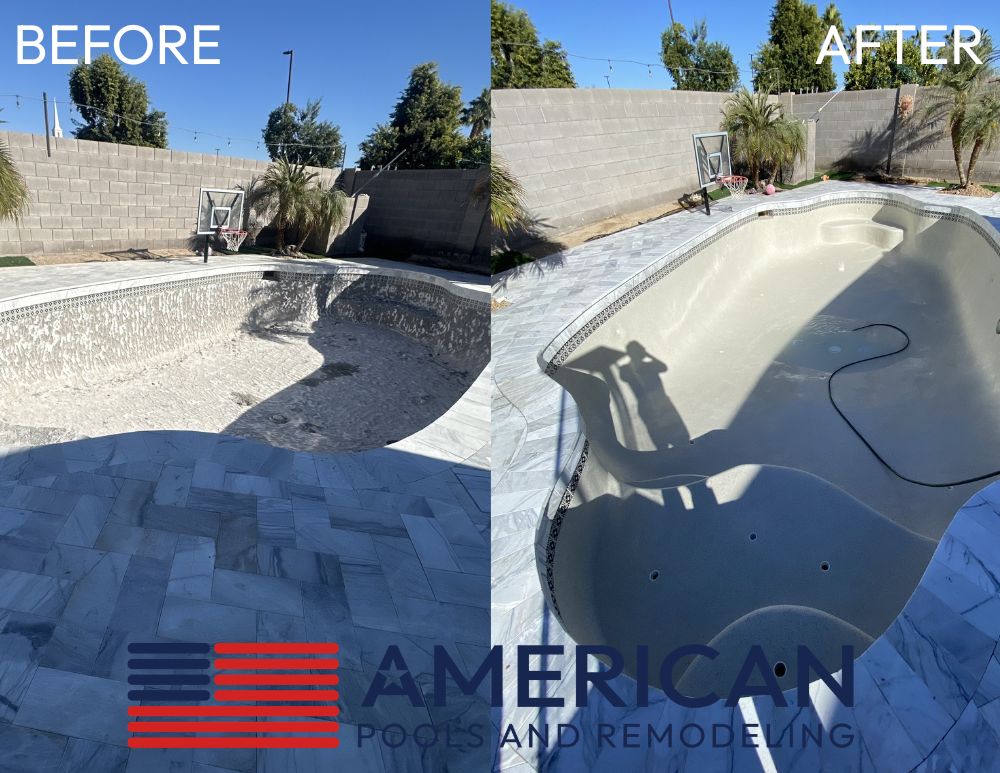
Signs Your Pool Surface Is Failing and When to Remodel in Arizona
Most Arizona pool owners don’t wake up one day thinking they need a pool remodel. In reality, pool surface failure happens gradually and is often mistaken for routine maintenance issues. By the time the signs become obvious, the surface has usually been breaking down for years.
Understanding the early warning signs can help you avoid repeated service calls, unexpected repairs, and long-term damage to the pool shell. It also gives homeowners clarity on when repairs are still effective and when a full remodel becomes the smarter long-term solution.
In the surrounding East Valley and across Arizona, these surface issues commonly appear during routine service visits, inspections, and repair calls, especially in desert neighborhoods where pools are used year-round and exposed to hard water and extreme heat.
During weekly service and repair visits throughout the surrounding East Valley, surface deterioration is one of the most common underlying issues we document. Many homeowners assume the problem is chemical or equipment-related, when the pool surface itself is the root cause. Identifying this early helps prevent unnecessary repairs and ongoing maintenance frustration.
Rough, Pitted, or Sandpaper-Like Pool Surfaces
One of the earliest signs of surface failure is a noticeable change in texture. If your pool feels rough underfoot or abrasive along steps, benches, or walls, the plaster or finish is wearing away.
This occurs as the cement matrix breaks down over time due to age, chemical imbalance, and prolonged exposure to Arizona’s desert climate. Once the surface becomes porous, it absorbs water and chemicals, accelerating deterioration.
At this stage, weekly service can help manage water chemistry, but it cannot reverse surface damage. Continued brushing and adjustments may slow the process, but resurfacing through professional pool remodeling is typically the long-term solution.
Stains That Don’t Improve With Cleaning or Chemicals
Persistent discoloration is another warning sign homeowners often overlook. If staining remains after professional cleaning, chemical treatments, or seasonal adjustments, the issue is usually embedded in the pool surface itself.
As plaster and aggregate finishes age, they become more absorbent. Metals, organic debris, and minerals penetrate the surface instead of sitting on top, making stains permanent rather than cosmetic.
Many homeowners first notice these issues during routine maintenance or minor pool repairs, long before realizing the surface itself is failing.
Cracks, Chips, and Delamination Along Walls or Floor
Small cracks or flaking areas may appear cosmetic, but they often indicate deeper surface failure. In Arizona, temperature fluctuations and soil movement can accelerate separation between the pool finish and the underlying shell.
Chipped steps, peeling plaster, or hollow-sounding areas are signs of delamination. These openings allow water to migrate behind the surface, increasing the risk of widespread failure and potential structural damage.
While patch repairs may temporarily improve appearance, they rarely last once surface failure has begun. A professional evaluation is usually needed to determine whether repairs are still practical or if remodeling is the safer option.
Chronic Water Chemistry Problems With No Clear Cause
If your pool suddenly becomes harder to balance, with frequent pH swings, rising calcium levels, or inconsistent chlorine demand, the surface itself may be contributing to the problem.
As finishes degrade, they interact with water chemistry. Aging plaster can release calcium into the water and disrupt saturation levels, especially in areas with naturally hard water common throughout Arizona.
Many homeowners replace filters or pumps unnecessarily, when the real issue is a deteriorating pool surface affecting water balance.
Visible Age Compared to Nearby Pools
In many Arizona neighborhoods, pools were built around the same time, particularly in communities developed in the early 2000s. If your pool looks noticeably older than others nearby, with dull color, uneven texture, or outdated tile and coping, the surface may have exceeded its expected lifespan.
Standard plaster finishes typically last 10 to 15 years in Arizona conditions. Pebble and aggregate finishes last longer but are not permanent. At this stage, remodeling becomes less about appearance and more about protecting the pool’s structure and usability.
When Repairs Are No Longer the Right Solution
There is a clear difference between a pool that needs repairs and a pool that needs remodeling. If surface issues keep returning, stains reappear quickly, or chemical problems persist despite proper service, repairs become temporary expenses rather than solutions.
This is where remodeling makes sense as a long-term correction rather than continued maintenance of a failing surface.
Why Early Evaluation Matters
Catching surface failure early allows homeowners to plan instead of react. Proactive remodeling decisions are typically less disruptive, more cost-effective, and easier to schedule than emergency repairs during peak swim season.
If you’re unsure whether your pool still qualifies for repairs or is approaching the point where remodeling makes more sense, a professional evaluation can help clarify next steps before problems escalate.
We provide professional pool service, repairs, and remodeling for homeowners in Chandler, Gilbert, Mesa, Queen Creek, Tempe, and surrounding East Valley communities.
Arizona Pool Surface FAQs
Most standard plaster finishes last about 10 to 15 years in Arizona’s climate, depending on water chemistry, maintenance, and exposure. Pebble finishes typically last longer but still wear over time.
Yes. As plaster or finishes break down, they can release calcium and disrupt water balance, leading to higher chemical use and frequent adjustments.
Resurfacing addresses the interior finish only. A full remodel may also include tile, coping, or other updates if those components are also worn or outdated.
Comments are closed